

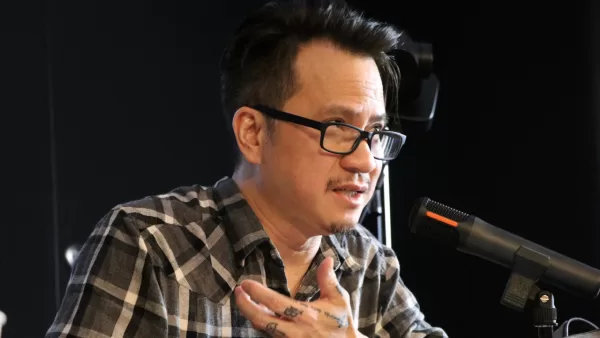
Recently, we got to talk with Dustin Nguyen, a popular artist who is no doubt a fan-favorite for many comic book lovers. After all, Nguyen has worked for DC Comics and WildStorm for a wide array of projects, including many memorable covers.
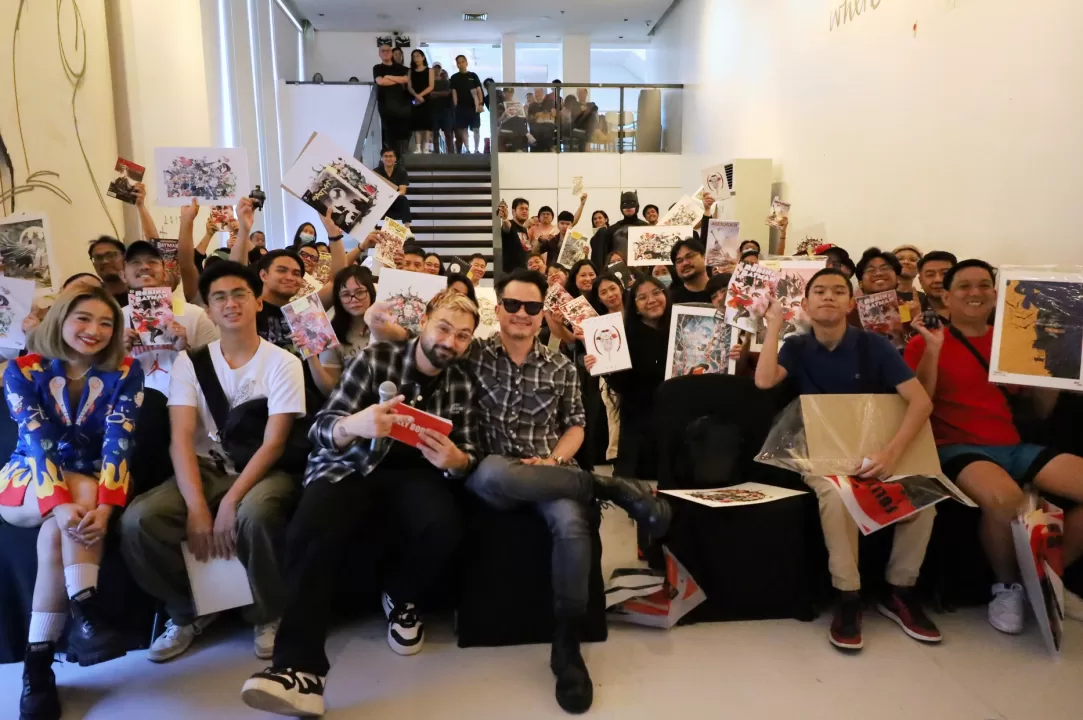
A few weeks ago, Dustin Nguyen visited Manila as part of Fully Booked’s Free Comic Book Day event. There, he participated in a Meet & Greet with fans. Before his fan meet though, we got to chat with him about his inspirations, thoughts on his signature style, and the challenges artists face today. On a lighter note, we also talked to him about his favorite and least-favorite characters to draw.
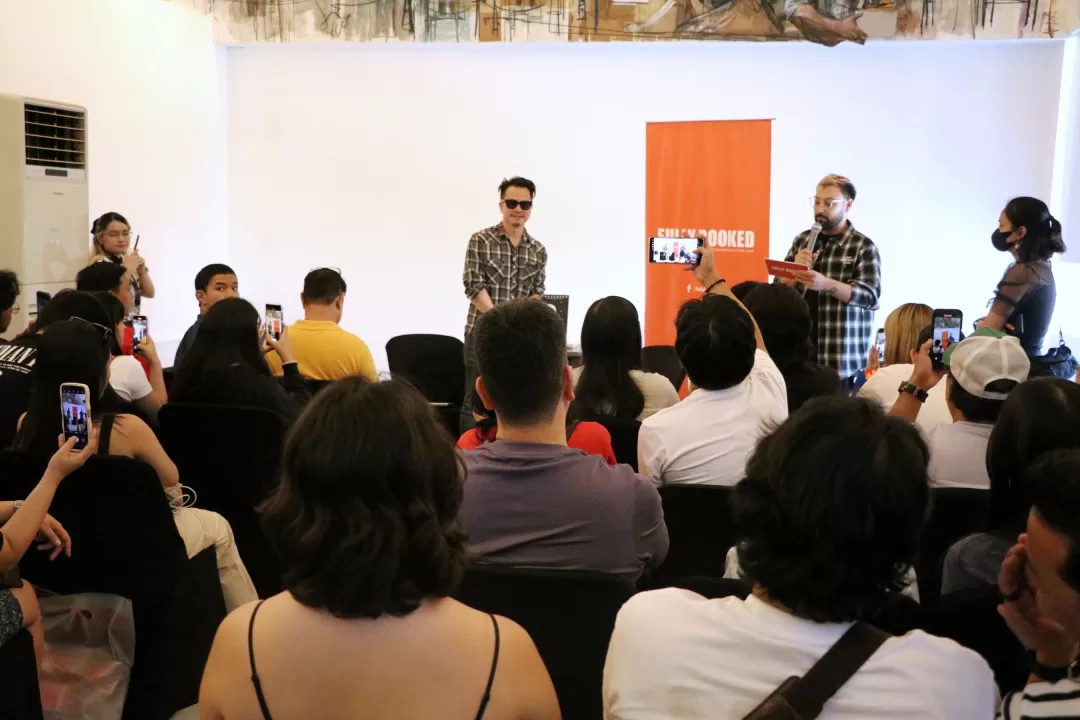
[The following is the complete transcript of our interview with Dustin Nguyen, edited for clarity.]
A signature style is something that develops naturally for artist. In your experience, how do you balance creating art in your personal style while still making it true to the character that you’re illustrating?
DN: I would say, depending on the book you’re working on—take a book like Batman, for example—he comes with so much history. We have a library of his material spanning decades. So, having a signature style is important, but sometimes it can be a little overrated. Other times, though, it’s good to have a signature style because people recognize you. Still, I think the journey that led you to that style is very important. That’s why, when you look at most artists—including myself—you can see how they started. In the beginning, I was drawing a lot like my heroes, like Travis Charest and Viola. Then, over time, it slowly progressed into something else. And every time, I try to do something different.
So, my approach is that I let the characters dictate the style, depending on the book. As a comic illustrator, I work with characters, and each book and character helps determine the artistic direction. For example, when I worked on Descender, Jeff Lemire never described what the character should look like. Instead, he described how the character spoke, what their planet was like, how they moved, and other details. Those descriptions built up a visualization in my mind, which helped dictate what the character would ultimately look like. I think my goal is for things to happen organically.
How do you find inspiration for your art? Do you look mainly at other comic art for inspiration, or do you have other types of art, or even movies or music that you look for as inspiration?
DN: Yeah, I actually get a lot of my inspiration from music and movies. When I was working on Wildcats 3.0, I was really into Wong Kar-wai films, specifically Fallen Angels. Fallen Angels is my favorite Wong Kar-wai movie—I love it. There’s this certain coolness in the way Leon Lai holds the gun, and the specific angles in the cinematography.
I draw a lot of my inspiration from movies, cinema, TV shows, and music—especially when I need to drown out the noise, the visual noise. Sometimes I play music; it can either hype me up or calm me down. And it really helps me draw.
Burnout is something that pretty much everyone in a creative field can struggle with. Personally, how do you manage?
DN: You know, it’s hard to manage. Burnout happens to everyone, like you said—it’s really tough. So what I do is try to prepare ahead of time. I take care of myself—both physically and mentally. It’s difficult because mental health is something everyone struggles with, but it wasn’t widely recognized until recently. No one really talked about it before.
A lot of times, there’s not much you can do about burnout. In some industries, people say, “Oh, you need a vacation, take a break.” But depending on who you are, that might not work. For me specifically, I can’t really take a break. My mind is constantly moving—even when I’m not drawing, even when I’m not working—I’m thinking about the next thing I want to do or how I want to approach it. So managing burnout is really tough. I think the best way to deal with it is to acknowledge that it will happen and prepare for it.
Yesterday, I spoke with art students at the University of the Philippines. I told them they need to prepare for burnout—not just mentally and physically, but also financially. As freelancers, we don’t get paid until the product is finished, so that’s something to think about and plan for ahead of time.
In today’s climate, artists face a lot of challenges such as disruptive technologies (like AI). In your experience, how important is speaking up for artists today?
DN: AI is just like any new technology. When Photoshop first came along, people were being called out for using it—that’s where the term “Photoshopped” comes from. People would say, “That doesn’t look real, that looks Photoshopped,” right? That’s how the term originated. When Photoshop first came out, it was frowned upon—just like any new tool that disrupts established methods. When comics transitioned from traditional inking to digital inking, that was also frowned upon at first.
Personally, I don’t believe in using AI at all, but I know it’s coming. It’s going to happen, whether we want it to or not. The best way to prepare for it is, like you said, to speak up against it now, so that in the future, hopefully, the right frameworks can be put in place—things like royalties, especially if AI is trained using someone’s artwork. I personally don’t know how that would work, because everything is moving so fast. I’m not well-trained in technology enough to speak on it deeply, but I do know that it’s inevitable.
The best thing to do isn’t just to fight it but to find a way to embrace it in a way that benefits artists—without compromising our creative control over it.
What can artists do to face these challenges?
DN: I think it goes back to your first question—a personal style. I think no matter how advanced AI gets, and it’s gonna get very advanced, there’s still something very—there’s still a lot of value in human error. And I do believe that a style is not something that’s created because you’re amazing. A style usually happens because of human error, flaws—the nuances of the way we illustrate—that’s what makes our style ours.
For a computer to pick up on perfection only, making everything perfect—obviously, everything is clean and shiny—but it’s the few simple flaws and the nuances of human error that make our style interesting. If you look at a style like Mignola in the ’90s, even today—the anatomy was always a little strange. Everyone had a little hunch to them, and there was just something about it. You looked at it, and you felt like a human made it, you know? Versus something so clean and digitized, created purely by numbers on the screen.
So that’s what I hope—unless AI gets so good that it starts mimicking errors.
On a lighter note, who are your favorite characters to draw/illustrate?
DN: Obviously Batman, right? Obviously Batman. I lean toward the darker Gotham characters—Batman, Mr. Freeze, Poison Ivy. Those were my favorites when I was breaking into comics.
But nowadays, I like creating my own characters. So my favorite characters are from my book, Descender—the little kids, the little monsters—just the characters I create. And I feel like, because I’ve created them, I can actually control how they look, and I don’t mind when I draw them “wrong.”
Like, if you asked me to draw Superman, I’d draw Superman. But if I don’t draw him the way I’ve seen him portrayed by artists who are better than me, I feel like I didn’t do him justice. And that instantly makes me not enjoy it as much. Whereas if I draw Tim-21, every time I draw him, he looks different—he has a different gear in his head, different wires. And that’s okay, because I created him—I can do whatever I want, yeah?
And that gives me a lot of joy—having that freedom and not feeling like I didn’t give it my all, you know?
On the flip side, who are the hardest characters for you to draw?
DN: Surprisingly, the hardest thing for me to draw is normal characters. I like drawing extremes—either really young, really old, really soft and gentle. That’s why, if you notice, I love drawing vampires and monsters. But I also really love illustrating children and cute little characters—very chibi-style things. I like the extremes.
Something in the middle is harder for me. As much as I love Superman, I find him difficult to draw because, even though he’s Superman, he looks normal—just like a regular guy, you know? And honestly, because I really suck at anatomy, I like drawing Batman because, well—a lot of capes, a lot of shadows hide things.
The hardest things for me to draw are the everyday scenes—not just characters, but settings too. That’s why I always tell myself I would never do a book with Spider-Man or anything set in New York. It sounds fun at first, but then you realize that more than half the book takes place at street level—where he’s just sitting around in a kitchen, eating, right? And for me, that’s tough.
I did that in the first part of my career, drawing Wildcats. Lots of sitting around talking, lots of very normal locations. It was a great training ground because it helped me improve my storytelling and narration skills. But given the choice, I love drawing the otherworldly—space, monsters, sci-fi, and just things that don’t exist. It’s a little easier.
I always say—I have the hardest time drawing a dog or a cat, but I can draw the hell out of a dragon. Because dragons don’t exist, I can make it up. And that’s what makes it fun for me. Everyday things feel kind of boring—not that I don’t like them, but I lose interest easily. I’d rather leave that to better artists who actually enjoy doing that, you know?
I came from a field where I illustrated buildings all day—the normal stuff. And for me, a lot of that feels more mechanical. I have to get it right, or else I’m not happy. So I’d rather do something where, if I don’t do it right, it doesn’t really matter.