


Along with a longer demo of the game, we also got another opportunity to ask questions to Digimon Story: Time Stranger producer, Ryosuke Hara.
In a previous interview a few months ago, we asked Hara about the game’s development time and core theme. Now, our questions are based on our longer demo time, specifically about the game’s bosses and visual design.
As our latest demo ended with a fight with Sharkmon, we began to wonder what the game’s other boss encounters are going to be like. Given that this game has turn-based JRPG mechanics, we wondered if there would also be bosses that present difficulty spikes. After all, this is pretty much a staple with most JRPGs.
Thus, we asked Hara if there would be noticeable difficulty spikes in the game. In response, he said:
“Of course, there will be bosses with high difficulty spikes. There are bosses that might be gate-kept by difficulty spikes. So, this will also play the part of how you grow your Digimon and how you evolve your Digimon. There are ways to overcome this wall, but we would recommend, just like how it works in RPGs, especially in JRPGs, that you do side quests. Doing these will help to lessen difficulties, just like how most RPGs run.”

So, as you may have guessed, plowing through just the story content will mean you’ll encounter some formidable walls in the form of bosses. That means playing side quests is recommended. Because the game will have many side quests, the hope here is that you don’t need to dedicate gameplay sessions to just grinding so you can become powerful enough to beat bosses.
Now, for players who simply want to experience the story, the game’s lower difficulty option should help smooth out these difficulty spikes. Hara explained:
“We would recommend that players play the side stories while they do the main quest. However, for players who just want to play the main quest alone, there’s actually a lower difficulty level. On this difficulty, players can just go with the main story without touching the side quests, and there will also be less of a difficulty spike in that sense.”
Along with the boss fight, our demo time also had us explore a bit of Shinjuku, one of the best-known spots in Tokyo. As the game will feature notable places in the real world like this, we also wondered about the developers’ approach to the visual design of the game’s two worlds. After all, Time Stranger is set in both the real and Digital Worlds.
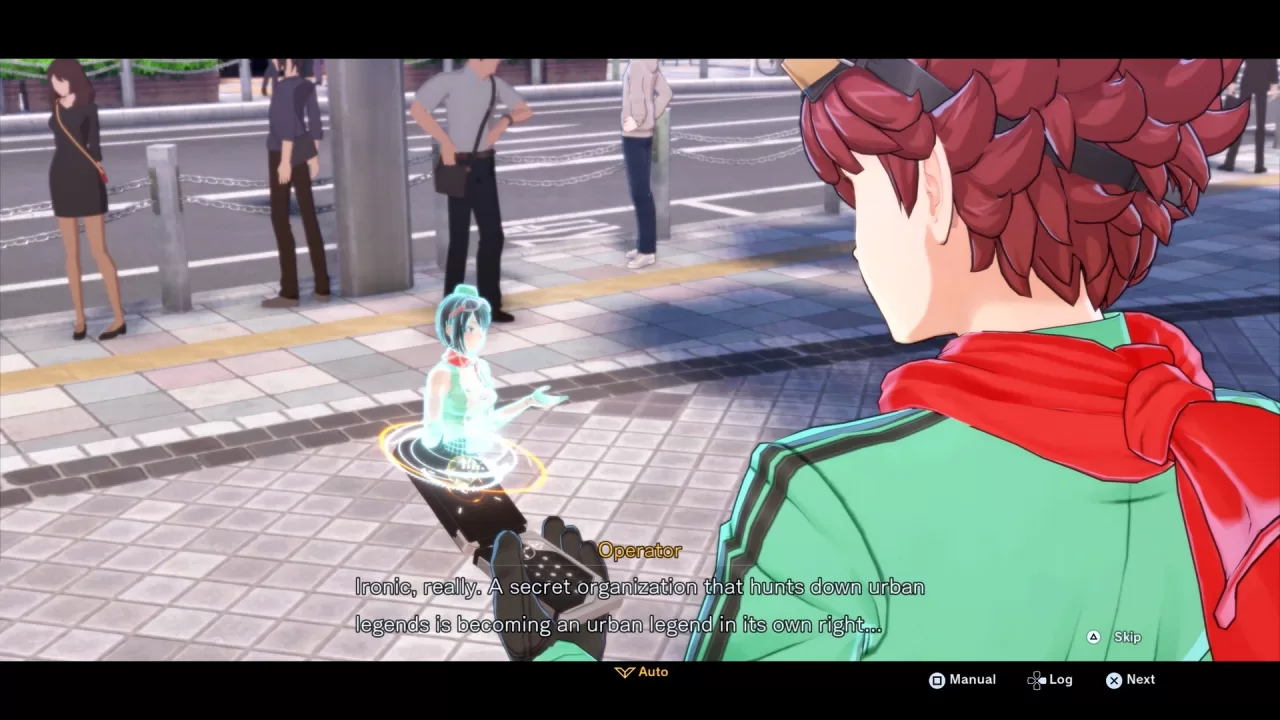
According to Hara, their goal was to give each world a unique look and feel to enhance the contrast between them. He explained:
“The main idea for Shinjuku (the real-world part) is to give it was to make it feel like it’s a world that has been lived in, to include characters, to include people, to give it a very realistic effect, and more realistic dimensions.
Then, for the digital world, such as Central Town, we based these on a more fantasy setting where the characters live there rather than being integrated into it. For this digital world, we made sure that, because in the Digimon universe, the motif of a gear is a significant part of the Digiverse, we focused on showing gears moving in the background of most Digital World areas. These show that players are in the Digital World versus the Real World. It provides contrast, but also a strong motif for the game world in general.”
Based on the scale of the game’s worlds, coupled with the in-depth mechanics coupled with difficult bosses, Digimon Story: Time Stranger promises to provide hours upon hours of fun for Digimon fans. If the game lives up to its promise, fans should find that this game will have been worth the wait.
Digimon Story: Time Stranger will be released on PS5, Xbox Series X|S, and PC on October 3, 2025.