


When I sat down to try Once Upon A KATAMARI at Bandai Namco’s pre-Tokyo Game Show demo sessions, I wasn’t sure what to expect. This was my first-ever Katamari game, and while I’ve always been aware of the franchise’s quirky reputation, I’d never actually played one myself. So when I finally got the chance to roll a Katamari for the first time, I was ready for a trip — and wow, did it deliver. For those who don’t know, Once Upon A KATAMARI will be the first brand-new entry in the series in over a decade and the game is as hilariously bizarre as ever. Just like before, the King of All Cosmos causes cosmic destruction (again), and it’s up to you, the Prince, to clean up after his mess by rolling up increasingly ridiculous objects into one giant, sticky ball — a Katamari — to form new stars, planets, and other celestial bodies. Here are our Once Upon A KATAMARI first impressions.
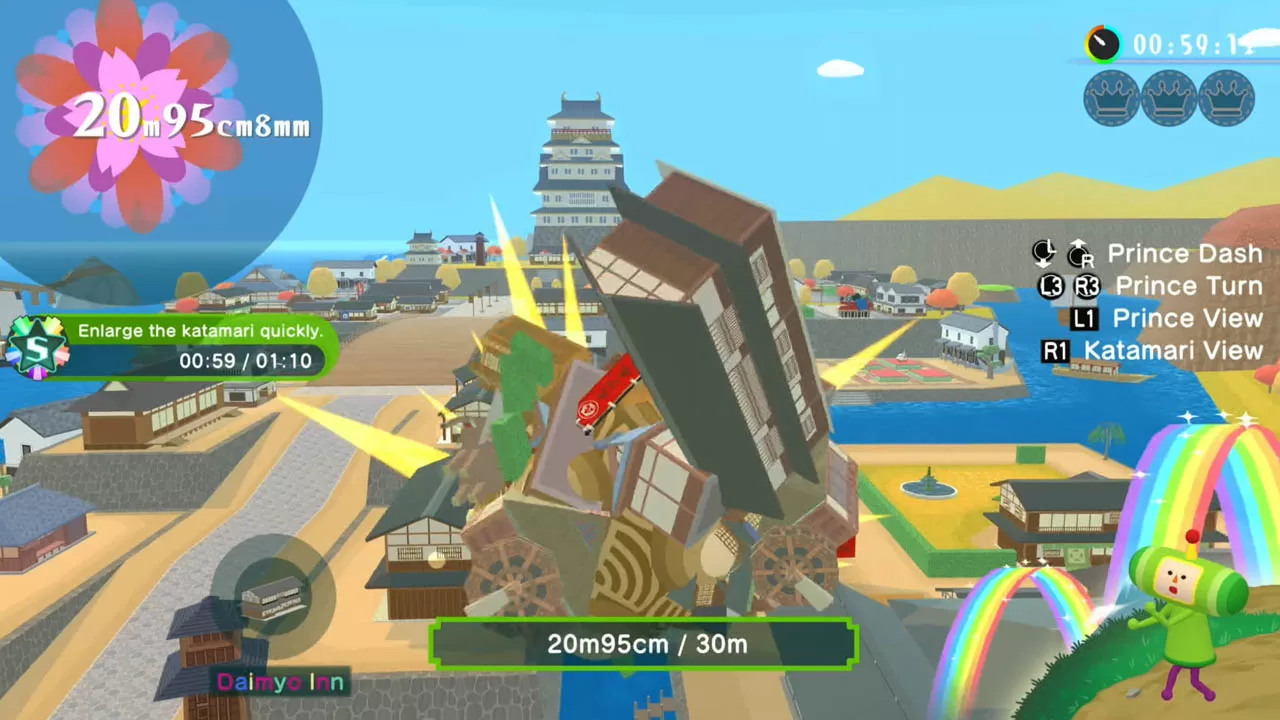
My first few minutes with the demo were… honestly a bit underwhelming, and I couldn’t figure out why. The gameplay felt fine, but it lacked that special spark I’d always heard fans rave about. Then I realized something: the demo unit’s BGM was turned off. Once the music was turned back on, I swear to you the entire experience for me transformed. The quirky, upbeat soundtrack injected so much energy into the game, turning what was previously “just okay” into something downright addictive. Rolling objects to the rhythm of the music is incredibly satisfying — it’s almost impossible not to smile as your Katamari grows bigger and bigger. Honestly, the music alone is reason enough to play this game and is the factor that just enhances all other aspects of it.
The demo featured a handful of stages that highlighted the variety of objectives you’ll encounter in the full game. At its core, it’s still about rolling up as much as you can, but some stages add clever twists. One quest had me helping a philosopher find inspiration — by literally rolling up other philosophers and merging them into a giant ball of insight, knowledge, and… wriggling trapped people (lol). Seeing little characters wriggling inside the Katamari as it grew was hilariously unsettling which perfectly captures the game’s trademark weirdness.
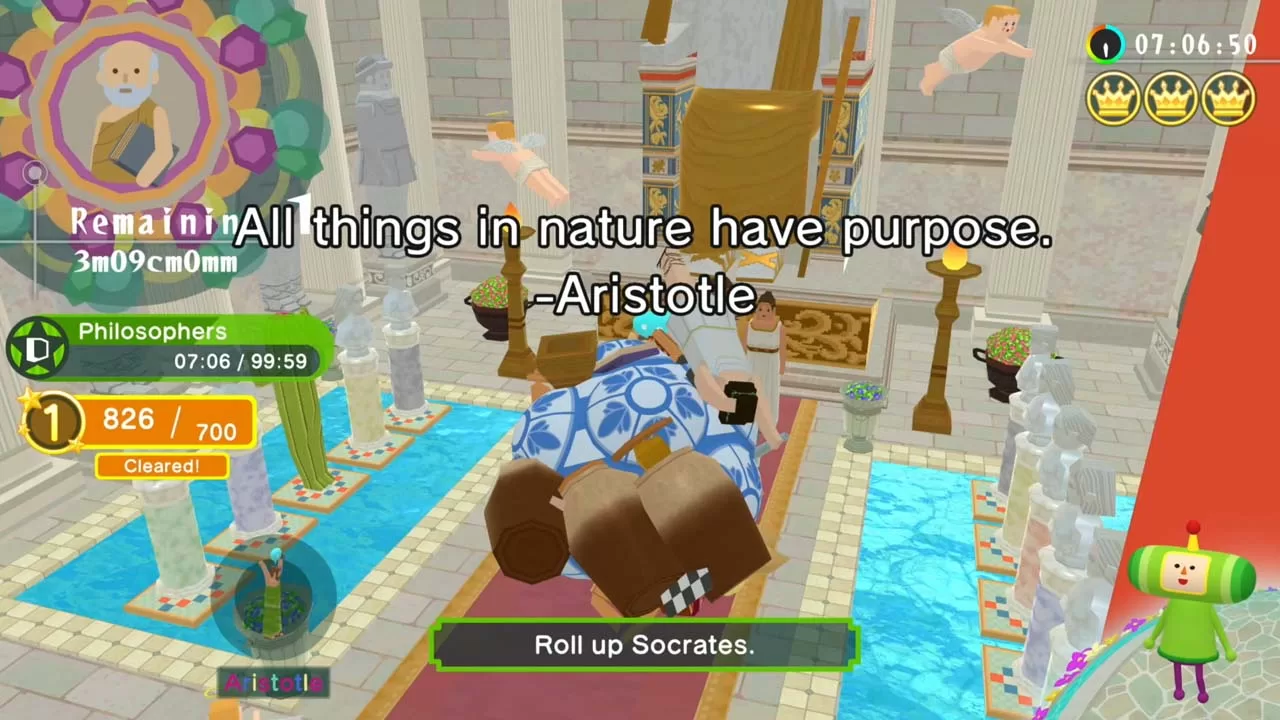
Another stage challenged me to build a “sweet” ball by only collecting desserts, fruits, and other sugary treats while avoiding things like fish or mayonnaise, which would lower my sweetness score. These extra constraints kept things fresh and made each level feel unique. In the Philosopher’s stage, there was even a moment where I had to carefully navigate narrow scaffolding with my Katamari, adding a light bit of platforming into the mix and testing how well I could control its movements.
Some new mechanics were also on display in the demo, like a scanner tool that highlights specific target objects and a magnet ability that pulls nearby items into your Katamari. These added layers of strategy were subtle, but they enhanced the classic gameplay without overcomplicating it. And of course, it wouldn’t be Katamari without the cousins. There are 68 of these oddball characters scattered throughout the stages, and you can collect them by rolling them into your Katamari. Once captured, they become playable characters, which is a fun incentive to keep exploring. There’s also a new character customization feature that lets you choose one out of the 69 (nice) cousins and tweak their facial features, colors, and more — a nice touch that adds even more personality to the game.
As a newcomer, the biggest hurdle for me was the control scheme. The classic dual-stick setup uses both analog sticks for precise movement, which can feel awkward at first. Thankfully, there’s also a simplified option that just uses the left stick, making it easier for beginners to dive in without getting frustrated. Once I spent more time with the dual-stick controls, though, they started to click, and eventually, they felt like second nature.
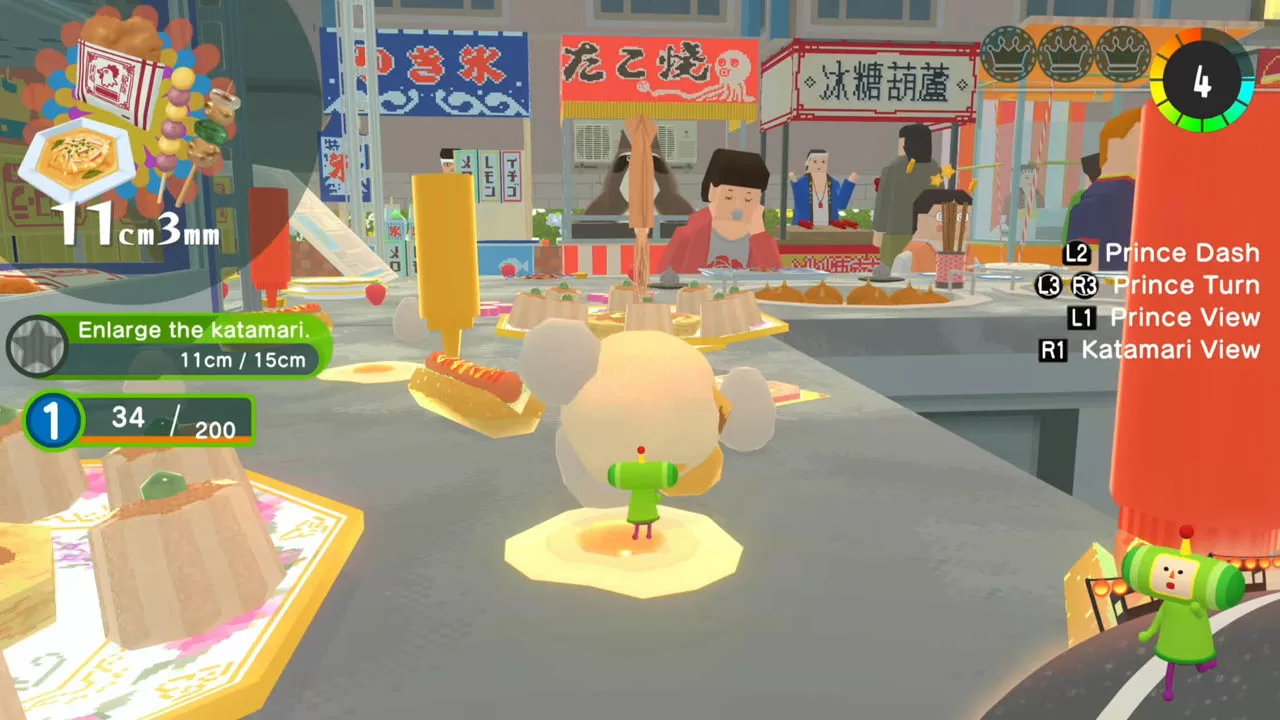
By the end of my demo session, I finally understood why the Katamari series has such a devoted following. It’s a game that’s simple yet endlessly fun, bizarre but oddly relaxing — especially when paired with that infectious soundtrack. Fans of the series will no doubt find plenty to love here, but even total newcomers like me should keep this one on their radar. Whether you’re rolling up philosophers, desserts, or entire neighborhoods, there’s something incredibly satisfying about watching your Katamari grow.
After my time with the demo, my Once Upon A KATAMARI first impressions can be summed up to ‘I finally get it’. This is a game I can see myself sinking hours into, and I honestly can’t wait to roll my heart out when the full game drops.
Once Upon A KATAMARI launches on October 24, 2025 for the PlayStation 5, Xbox Series X|S, PC, and the Nintendo Switch.