

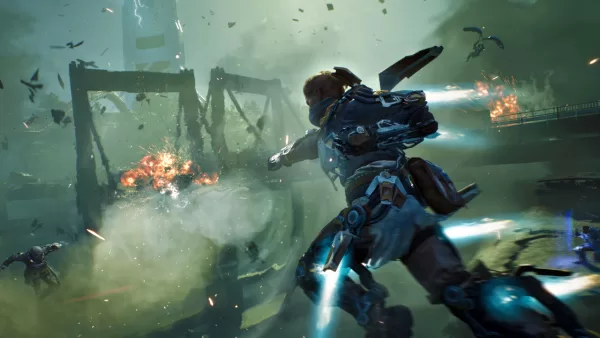
At Tokyo Game Show 2025, we got to have an insightful chat with Exoborne Narrative Director, Martin Hultberg. As he’s also the CMCO & Co-founder, Sharkmob, our discussion ranged from the game’s concept stages to the current challenges that they’re facing as development on the game continues.
Back in August at gamescom, we got to try out Exoborne in a hands-on session. As our key takeaway was that the game has promising movement and combat mechanics thanks to the exo-rigs, we asked plenty of questions about how the team has gone about developing and refining this aspect of the game.
Aside from this, we also asked Hultberg about how they’re integrating story and lore into Exoborne, even though this game is more of a gameplay-first experience. Plus, as Hultberg is a co-founder, he shared some interesting insight into how their previous game inspired this upcoming title.
[The following is a complete transcript of our interview with Hultberg at TGS 2025, edited for clarity.]
How did the concept for Exoborne come about?
MH: To explain that, we have to go back a little further to our first game, Bloodhunt.
You played as a vampire, and it was set in Prague. It was a very vertical combat experience, with lots of climbing on walls and jumping between rooftops. That whole vertical combat aspect was something we really liked and wanted to carry over into the next project. So things started with us trying to come up with an idea—or an excuse—for how we could keep that vertical movement and pacing we were after.
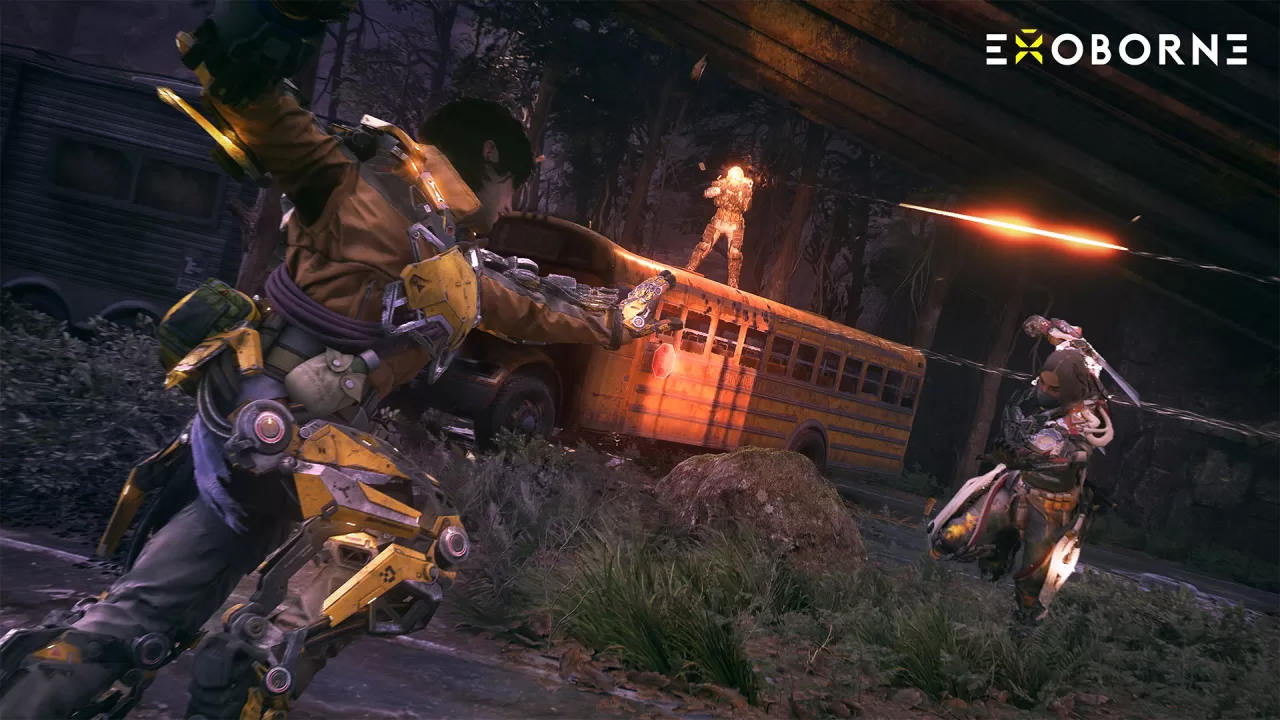
We knew we needed something more than just human combat. It had to feel almost superhuman. That’s when we started thinking about the exo-rigs as a way to explain how you could jump, avoid fall damage, and perform all these fantastic moves. Traversal led us to the exo-rigs, but then we needed a world where they made sense.
We also recognized some problems with Bloodhunt’s world: it was so compact and dense that firefights often broke apart too quickly. You could just jump off a rooftop, disappear, and disengage. That led to a combat style where either you killed someone instantly or they escaped, and the fight ended without closure. It felt unsatisfying.
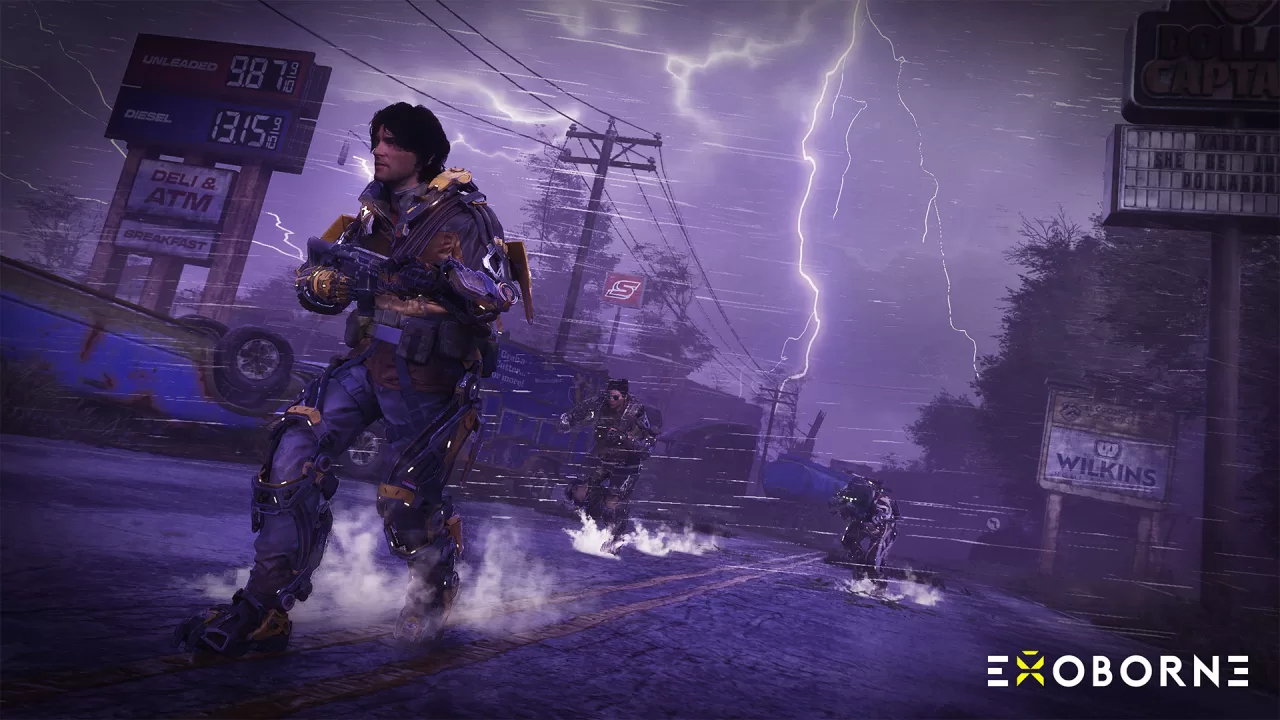
So we wanted a world that was more open and fractured. That’s when we came up with the idea of an apocalyptic scenario, where the world itself had been torn apart. But we didn’t want to fall back on familiar disasters like nuclear war—we’ve seen that a million times. Instead, we were drawn to the idea of the forces of nature—winds, water, and other natural elements reshaping the world.
That’s how we arrived at the forces-of-nature concept for the game. Combining that with the exo-rigs gave us the seed of what would become Exoborne. From there, we went on to choose the setting—the United States—and continued building from that foundation.
What learnings from your previous game, Bloodhunt, were you able to apply to Exoborne?
MH: So, I think there are many learnings, and you’ll probably get slightly different answers depending on who on the team you talk to. But for me, one of the key things was what I mentioned earlier: the idea of the combat space. It needs to be a bit more open and a bit flatter than what we had in Bloodhunt, because otherwise it becomes too hard to shoot each other—you’re breaking line of sight all the time. That was a major takeaway.
Another one was the speed at which you can move. Most people are used to playing shooters on a more horizontal plane. If you look at games like traditional Counter-Strike or Call of Duty, or Battlefield, yes, you can have things happening in the sky or above you, but mostly you’re shooting at people on the same horizontal level. In our game, though, you also have to be able to move quickly on the vertical axis with your sights. That meant we needed to pull back a bit on the vertical movement speed, because it was too fast and most players couldn’t keep up.
So, the line of sight, the speed at which you move and shoot, and also the types of abilities that work well in this kind of combat environment—those were the major things we carried forward from Bloodhunt.
Exo-rigs and movement in general are key factors in Exoborne. How long did it take for you to get the rigs to where they are now in terms of feel?
MH: That’s a constant process, and it’s one you always have to reevaluate when you make balancing changes. Maybe you add a new weapon, or maybe you adjust something like the time it takes to switch from third-person to first-person aiming down sights. All of those things affect how you acquire a target, and then you might have to reconsider traversal as well.
So I think it’s something we’re still working on. Right now, we have a live test running for about three weeks, and we’re going to get a lot of good data on exactly how people interact with the game. Then we’ll reevaluate again to see if we’ve hit the “sweet spot”—is this where we want the speed to be?
We’ve been working on this since the very beginning of the project. It’s been years, and it really is at the core of the experience.
Would you say that the exo-rigs are the most challenging thing to develop in the game?
MH: I think it’s one of the challenging parts, but there are many others. For example, in an extraction PvP game, if you die, you lose everything you have. That’s part of what makes it interesting, but it’s also something that can drive people away—because if you’re not progressing in the game, it’s not fun.
So one of the big things we’re looking at right now is how to maintain that sense of progression while still keeping the high stakes. Traversal and movement speed, like you mentioned, are in a good place. They can probably be tweaked and improved a bit, but we’re not too worried about that—I’d consider those standard balancing challenges.
What we’re more focused on now is making sure players extract enough times and continue progressing. That feels like a more integral part of the experience to solve.
I think that makes a lot of sense, because for these types of games, you really have to balance raising the stakes, making sure the pressure and intensity are there. But if you push it too far in that direction, it just stops being fun.
MH: Yeah, exactly. Just to give you an example, that was something we noticed quite quickly when we started the current test. On one of the maps, players weren’t extracting at the rate we had anticipated. So what we did was add more extraction points to try to even out that number.
There are many ways you can adjust things—adding extraction points is one, but we can also tweak the timer, like how long it takes for the ship to arrive, and other factors. There are a lot of variables you can play with, but you always have to keep an eye on that curve—making sure people are having fun. Because at the end of the day, it’s a game, and that’s what it’s supposed to be.
As feedback is such an important part of your development now, how do you manage to filter the feedback from within the team and from the players? After all, balancing the game for some players might mean it will become too difficult or unfun for others.
MH: What you actually have to do first is decide: what are we trying to fix? For example, if you’re trying to improve extractions—if you want more people to successfully extract—it’s quite likely that the best players are already doing fine. They’re skilled enough to kill other players and extract consistently, so that’s not really the problem. The real question is: why are the other players failing their extractions?
It could be because they’re getting killed by stronger players. Or it could be that there aren’t enough extraction points, which forces too much concentration and fighting in one area. So the first step is to clearly define the problem. Then you look at the mechanics around that problem, and identify which clusters of players you should be analyzing feedback from.
We can break that down quite well. From the raw game data, we can see where people die, how they die, and when they die. On top of that, we send out regular surveys for player feedback, we run in-studio tests where we invite people to play, and we have a Discord group of community members we’re in constant discussion with. Our community managers are also active across social media, gathering feedback.
The challenge is to aggregate all of that and look at it holistically. Because, as you hinted, if you listen too much to a small subset of players, you risk negatively affecting the experience for others. So you always have to balance those changes and work toward a clear intent.
What about the gunplay? That’s also an important factor in every shooter.
MH: Yeah, I think the ultimate answer here would come from a combat designer—and that’s not me—but I do know that when you make a shooter, one of the most important things to nail is the feeling of shooting the gun. The sound, the recoil, the effects—all of that needs to feel good. And of course, that’s different for each person and each weapon. But everyone expects a loud bang from a sniper rifle, and everyone wants that staccato rhythm from a heavy automatic gun.
That’s just on the audio side. When it comes to actual use, like damage, it becomes more of a numbers game. After our last big public test, we added a new ammo system and a new armor system. Now, weapon damage is static but modified by the ammo you use. That lets us play around with different ammo and armor combinations to create the sense of impact you expect from a weapon.
But it also makes things more complicated. There are about five different ammo types, each geared toward different armor types. So it’s not as simple as always choosing the most expensive ammo—because if you die, you lose it. Sometimes you’ll go in with lighter ammo, but you still want that feeling of power from the gun. That adds more variables to balance.
So yeah, it’s very complex to balance weapons. Like you said, it’s the heart of the experience—the shooting itself. It’s both about the feel and the numbers game.
Would you say the core appeal of this game lies in something specific? Because when it comes to extraction shooters and tactical shooters, there are already a lot of options for fans of the genre. Is there a particular aspect of your game that sets it apart for you?
MH: I definitely hope it can stand out in such a competitive space. I mean, we’re betting on that. I think what really sets it apart is the fluid combat that comes from combining traversal with shooting. I’ve experienced this myself many times during the live test last week. There are shooting situations in our game that you simply don’t see in other extraction shooters, at least as far as I’m aware, and I’ve played most of them, some of them religiously.
You can end up in very dynamic combat scenarios where positioning, flanking, and movement become just as important as reflexes. It’s not only about who can snap their aim onto a target the fastest, but also about who can maneuver into the best position. In that sense, it’s almost like mental chess, constantly thinking about how to out-position your opponent.
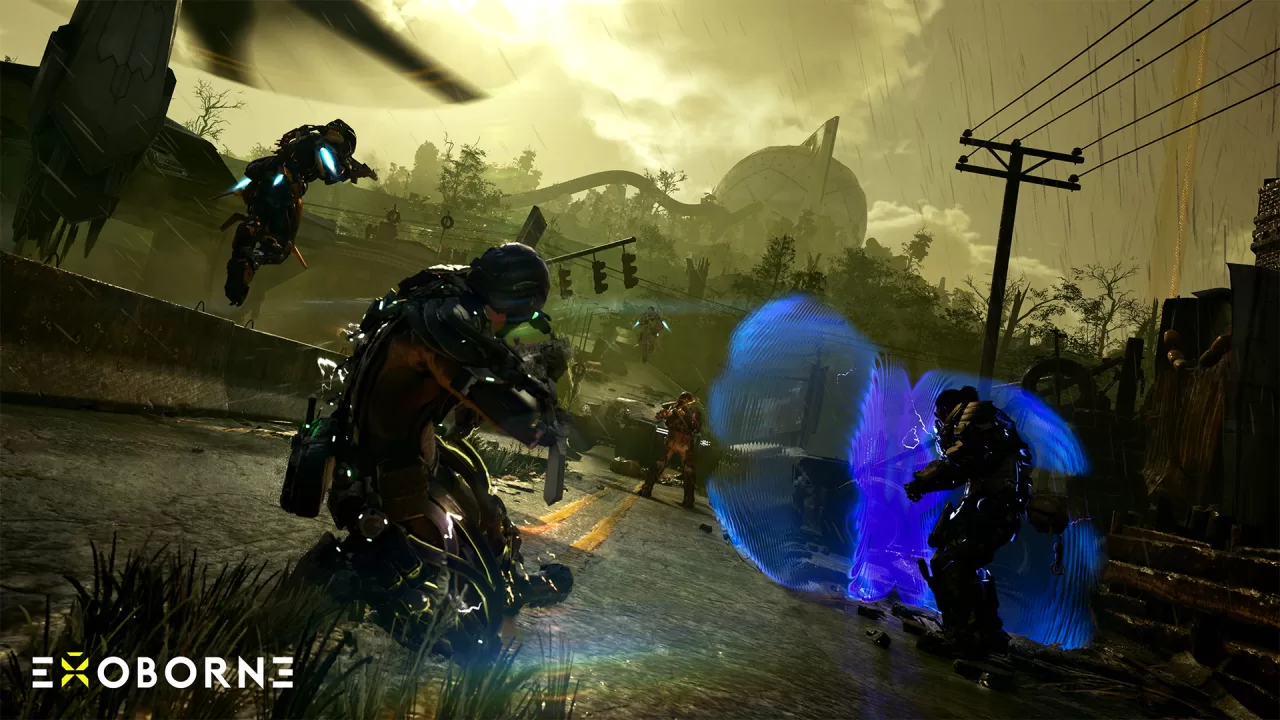
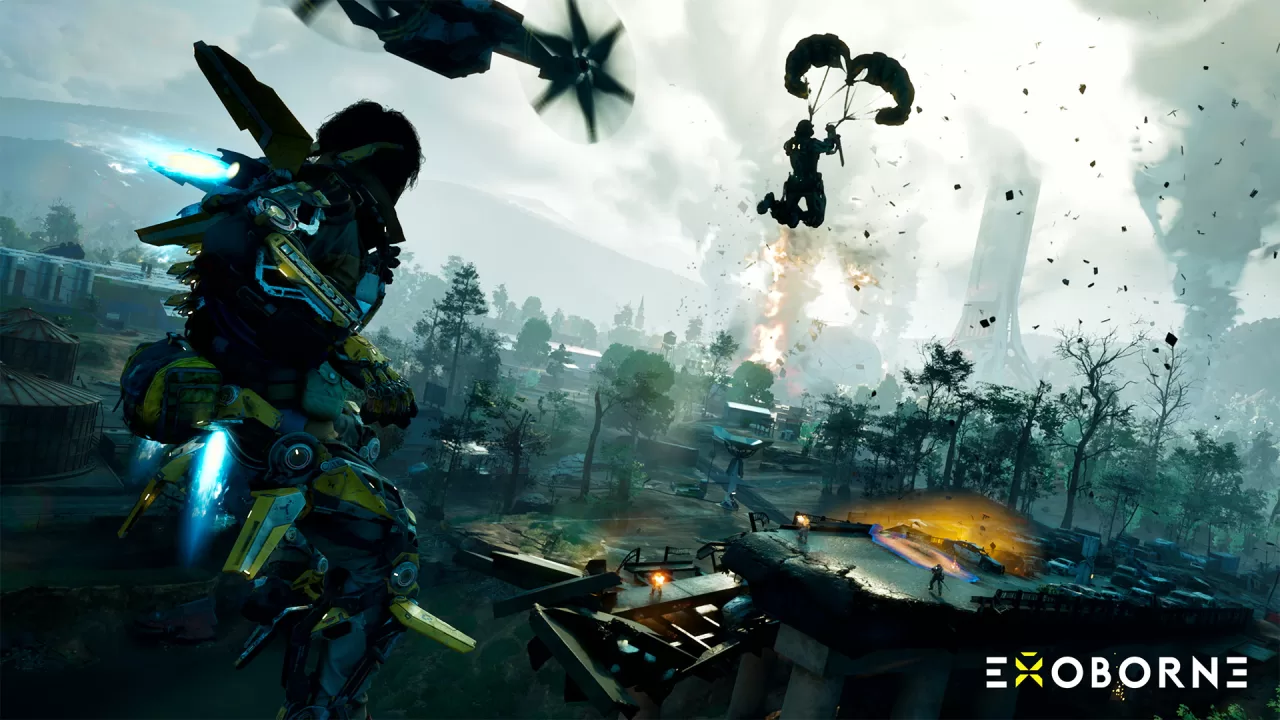
Movement is more important in Exoborne than in many other shooters, especially because you can do it so quickly with the tools you have—the grappler, the glider, the jump jets, depending on which exo-rig you’re using. That, I think, is what sets us apart.
I believe it’s enough to carve out our own space in this genre. The real challenge is getting people to try it, because it’s hard to explain in words or show in a screenshot. It’s something you feel when you play. And we can see it—when people get their hands on it, they understand right away. They get that feeling of, “Ah, this is empowering.”
What about its story? Story and lore-wise, what can players expect in this game?
MH: We are always gameplay first. We’re not a narrative studio, and I’m the narrative director saying that. Gameplay always comes first. But there is something that guides both narrative and gameplay, and that’s what we call the player fantasy. For us, everything starts with defining the player fantasy, and then both gameplay and narrative follow from that.
Yes, gameplay usually moves slightly ahead of narrative, and that’s because, as you said earlier, it has to be fun first and foremost. We don’t sacrifice gameplay for the sake of narrative. But the two are developed in parallel, very closely, and much of the narrative is connected directly to the gameplay.
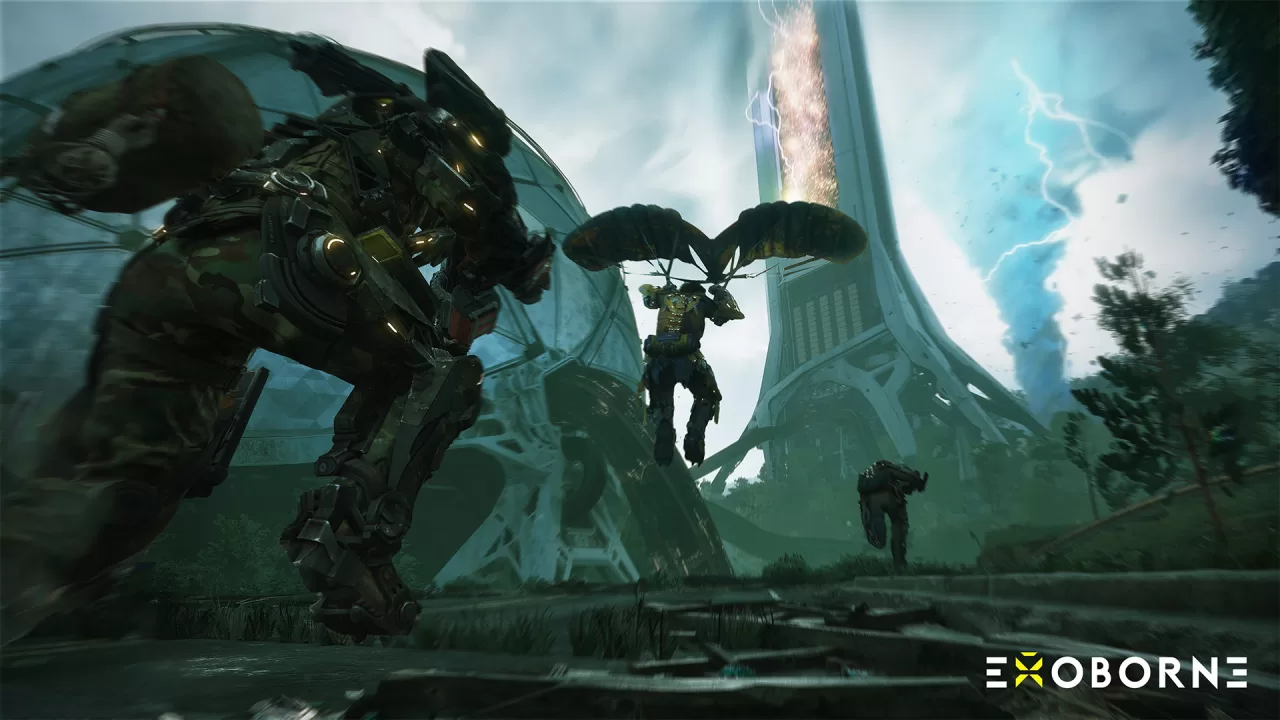
Take the big towers you see in the game, for example. They were originally placed there for narrative reasons; we needed a way to explain how this climate disaster could happen so quickly. So we invented these geoengineering towers and tied the disaster to them, saying they were the cause of the rapid climate collapse. But then they started to connect to gameplay as well. Suddenly, players were asking: What can we do with these towers? Maybe they’re cool locations to find the best loot. Maybe they can signal incoming weather changes with different sounds.
They also work as what we call “weenies.” I don’t know if you’re familiar with the term, but it comes from amusement park design. You need landmarks that stand out from a distance and make players think, I want to go there. So the towers became a form of navigation tool, too.
That’s a good example of how narrative and gameplay intertwine when it’s done well. You shouldn’t separate the two—they should always be created together, tightly connected.
It’s interesting that you mention that. In a lot of games, narrative is more than just the pre-briefing before a mission; it’s also about how the story unfolds during gameplay. Do you face any particular challenges in that aspect of development?
MH: Countless times as Narrative Director, I can speak to the many challenges that come with narrative design. One of the first decisions we made was that this would definitely be a PvP-first game. It’s a PvP experience. And creating narrative for a PvE game versus a PvP game is very, very different.
In PvE, you can control the tempo and pacing much more. As a developer, I can decide to slow things down so you can enjoy a narrative moment, and then ramp it back up again, because we control the entire environment. In PvP, we don’t have that control. I can never take control away from you as a player. In PvE, I can trigger a cutscene at any time, and you’ll accept it, because nothing else is happening. But in PvP, if I take control from you, someone could kill you. I can’t pause the entire server just because you’re watching a movie.
So we had to remove some narrative aspects from the second-to-second gameplay and place them elsewhere. That’s why all of our cutscenes play outside of sessions, never during. But we still wanted narrative inside the sessions, because otherwise it would feel disconnected.
That’s where environmental storytelling comes in. We created places that tell a story, and collectibles with narrative elements you can explore when you feel safe. You can listen to them in session, but only if you choose to trigger them. That’s important, because so much of how you play is based on audio—you’re listening for the mechanical sounds of exo-rigs, or the grapplers that tell you other players are nearby. You don’t want an audio log playing over that.
So it’s all about making sure the narrative is opt-in, controlled by the player. And that makes the experience feel different, because the story unfolds on your terms, not ours.
How do you handle feedback for this aspect of the game?
MH: We do a lot of internal tests early on. We have a test lab at the studio where we invite people in, gather feedback from the team, and that’s really the main tool we can use. We don’t usually get much narrative feedback from the larger playtests. We get some, but not a lot—and by that stage, it’s typically too late anyway. You can adjust combat and other systems through balancing, but you can’t really change the narrative that way. Telling a story is a very different challenge.
Even so, we’ve gotten a lot of useful feedback, and we can see which areas players struggle with. That actually led us to add a completely new character. We introduced a handler called Sticks—she wasn’t there before the first big test. But we noticed players were having trouble holding the narrative together, so we created a character to help guide them.
So there are always options to improve the narrative, but it’s a bit more difficult. It’s not the same kind of challenge as balancing gameplay.
From a narrative and gameplay perspective, are there other works that have inspired this game?
MH: I think there’s a lot of inspiration on different levels that goes into this. Looking back at my own body of work, I can see a red thread running through all the projects I’ve been part of. In the past, I’ve worked on a number of games with similar themes.
In this case, there’s a strong rebellion theme—you’re rising up against an oppressive force, and it’s about the importance of not being passive when you feel you have to act. The inspiration comes from many places: history, movies, books, and yes, other games too, though not as much. Personally, I tend to draw inspiration from other games mechanically, not narratively. Narratively, I look more toward other bodies of work.
For this project, there’s been a lot of focus on American history, since the game takes place in the U.S. We’ve tried to weave in elements of that history, while also looking more broadly at society in crisis. What happens when a society is pushed to the breaking point? What tends to happen to the people within it? And then we try to tell stories around those questions. That’s what I’ve found most interesting to explore in this game.
From an overall perspective, how is the current feedback from playtesters? Were there things you didn’t expect them to do?
MH: Yes, there are many things happening that we didn’t expect—and that’s the cool thing about letting players loose in your world. They figure out ways to do things you never anticipated as a developer. You might have a clear idea of how something is going to be played, but then someone comes in with fresh eyes and says, “Oh, this is the best way to do that.” And you realize, “Yeah, we should have thought of that.”
We’ve been discovering a lot of things this way. It ranges from the number of extraction points on a map—which directly affects how many people successfully extract and how much combat takes place—to the strategies players develop in certain areas. Sometimes we see players adapting incredibly smart tactics that we didn’t necessarily anticipate when designing the maps.
I won’t give away any tips, but there are areas that are very well positioned to dominate almost an entire map. That can be fine, as long as there’s a clear weakness to that location. If not, we have to make sure the weakness is pronounced enough for others to exploit—or else nerf the location so it’s not overly dominant.
But ultimately, we rely on players to find those places and show us how they can be used, because players are always better at that than we are. It’s just the nature of things.
Can you give us an overview of what it’s like to work on the game? From both your office in Malmö, and how coordination is done with external studios, if there are any.
MH: Yeah, so the bulk of our team is at the Malmö studio in Sweden. We do collaborate a bit with some outsourcing partners. We were fortunate to get some help from Jäger, a German studio, but overall, outsourcing isn’t a big part of the project. Most of us are in Malmö, which obviously helps, because communication is easier and we can really align around what needs to be done.
Right now, we’re in the middle of a big online test, and that means every day is a discovery. Every day is an important meeting. Every day is a decision point where we have to say, “Okay, we really want to try this.” Then we have a couple of days to implement it, roll it out, and measure the results again.
At this stage, we’re essentially live, which is really exciting for us. It means we can practice and refine our live methodologies and processes before the game actually goes fully live.
Exoborne will be released on PS5, PS4, Xbox Series X|S, Xbox One, and PC.