

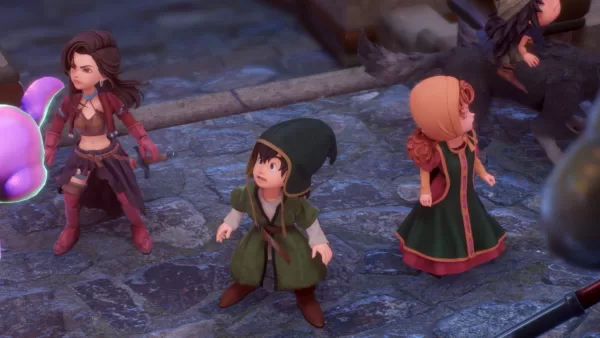
At Thailand Games Show back in October, we got to try out Dragon Quest VII Reimagined, the upcoming remake of the classic Dragon Quest VII. We’ve seen the first three Dragon Quest games get remakes recently, all three featuring Square Enix’s now signature HD-2D style. Interestingly, the Dragon Quest VII remake opts for a different look, which the developers describe as a diorama style.
This is an interesting choice, especially considering that the HD-2D style has gotten praise from critics and fans alike, though it makes sense. After all, the original Dragon Quest VII (or Dragon Warrior VII as it was originally released in North America) featured a 3D world, so going to an HD-2D style is a bit of a downgrade. Well, downgrade might not be the right word for it, but taking an originally 3D game (at least when it came to its environments) and making it 2D doesn’t seem like a fitting choice.
Along with the visual update, Dragon Quest VII Reimagined also features plenty of quality-of-life improvements, along with an update to the battle system in the form of the ability to “Moonlight” (letting characters use a second class).
While I wasn’t able to explore this aspect of the game much, I did get to experience the game’s combat system, as well as explore some of its environments. Based on what I’ve played, this seems to be an even more approachable place to start the series for newcomers.
Even More Accessible than the Previous Remakes
The Dragon Quest III HD-2D Remake featured a lovely art style combined with helpful quality of life features that made it a great entry point to Dragon Quest, at least for existing JRPG fans. After all, while there are many useful additions like battle speed, the game still has random encounters, which may not be to the liking of some players.
Meanwhile, the Dragon Quest I & II Remake also has useful features to make the game feel more approachable, but the underlying mechanics of I and II have aged noticeably. For instance, Dragon Quest I is a solo experience where you only play one character instead of a party. Dragon Quest II at least gives you a party, but there are some particularly brutal mechanics (like chance-based revival).
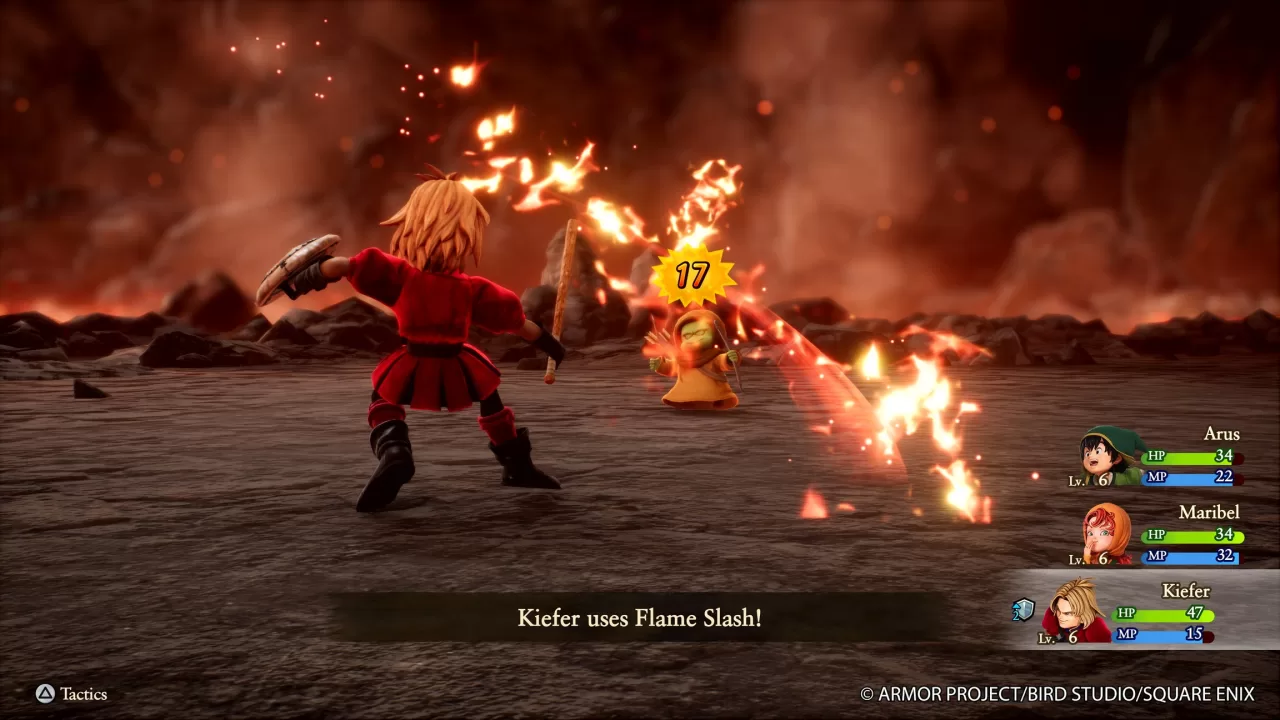
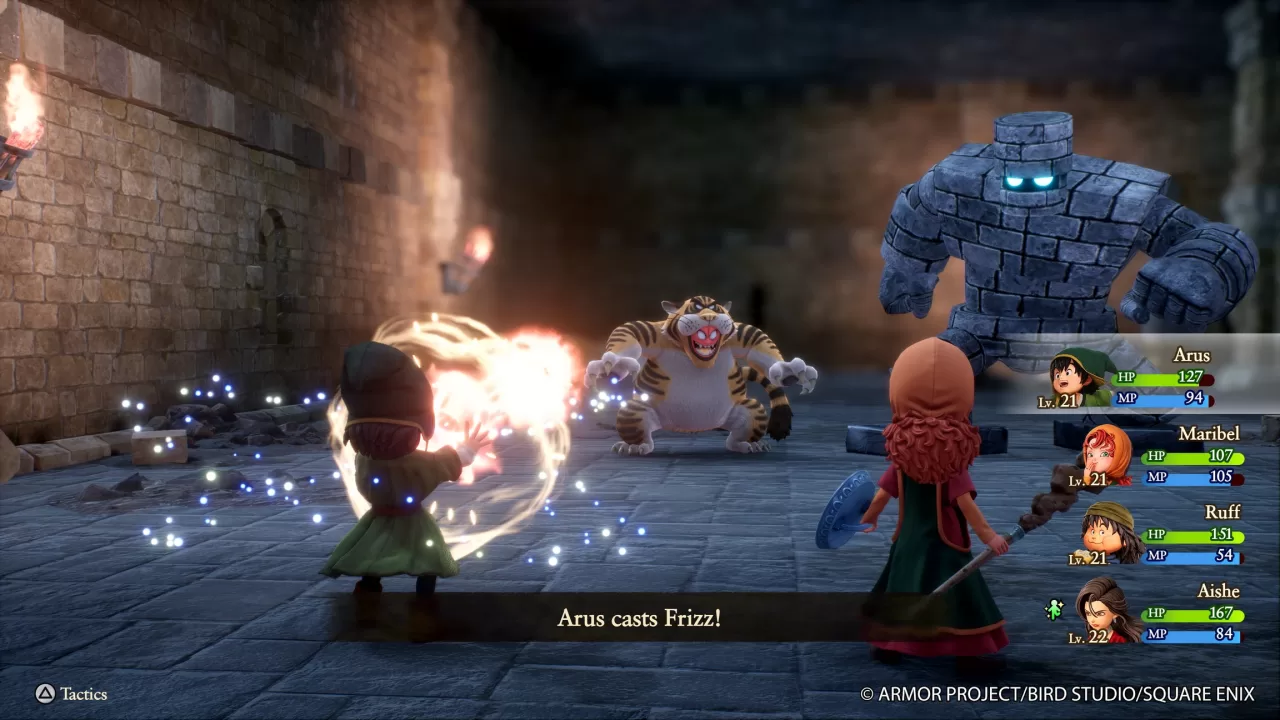
As for Dragon Quest VII, this is still very much a classic Dragon Quest title, meaning combat and exploration work mostly in a similar way. You still control a party of four, with fights against enemies being turn-based. Your goal in each encounter is to hit enemies with attacks or skills that they’re weak to, all while keeping your party’s HP topped up throughout.
One of the things that makes this game more approachable than the HD-2D remakes is that you can actually see enemies instead of them being random encounters. With this, you can more easily avoid enemy encounters if your HP or MP is running low. You can even whack enemies in the overworld to trigger a combat encounter, and what’s nice is that, if you hit a weak enemy, you won’t have to face it in a turn-based fight.
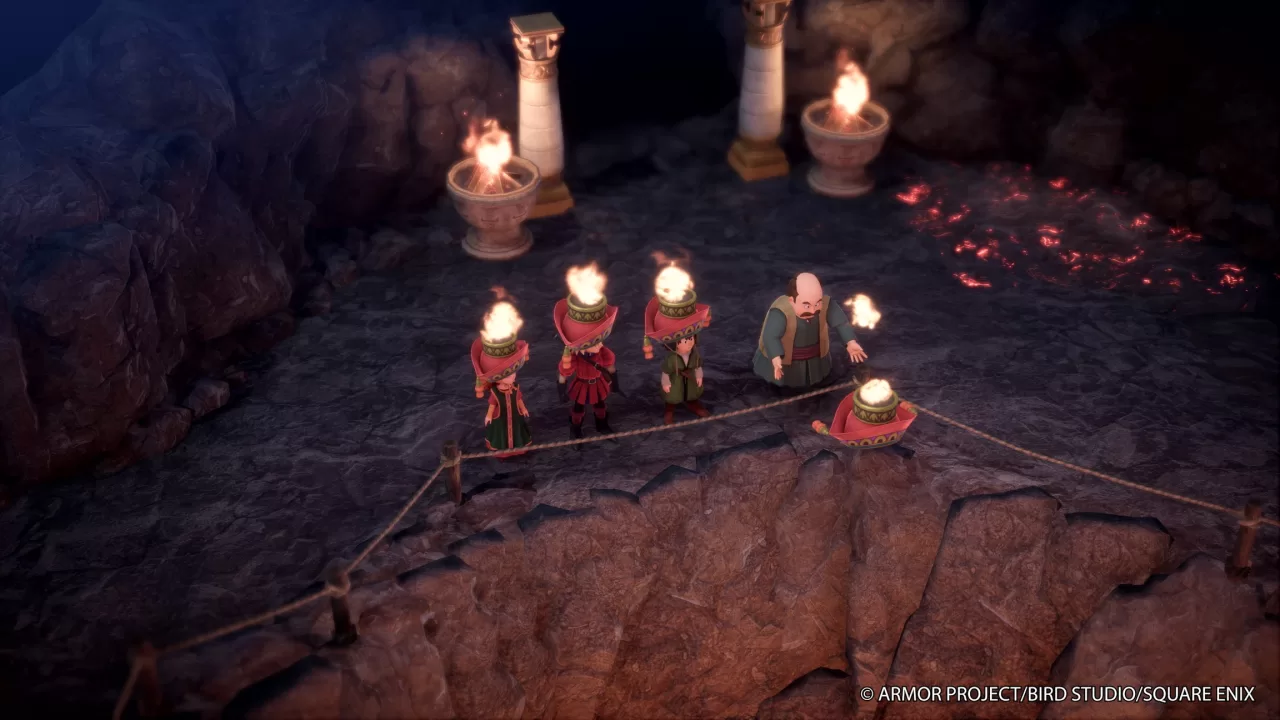
Another thing that helps make exploration feel better is that dungeon layouts are less confusing. In the volcano dungeon that I explored, the path to the boss fight was marked clearly, without making the dungeon feel too linear. I was still exploring places to look for loot, but at no point did I become hopelessly lost.
In this said dungeon, I only had a party of three, with only a couple of skills available for each. After I finished this section though, I got to try out a sequence with a full party of four, complete with more levels and skills. During this part, I had fun with the combat, as the number of skills and elemental weaknesses to consider helped make the combat encounters feel more dynamic.
It also helped that each character can “let loose” at some point during combat. When this happens, that character gets powered up, with the buff depending on their chosen job class (or Vocation, as the game calls it). Because of this sort of “ultimate” system, combat encounters get an extra level of depth, as you can choose to save these up and let them loose against bosses, or if you find yourself in a pickle against difficult mobs.
Because of this extra depth in combat, coupled with the fact that there are no random encounters, I can say that Dragon Quest VII Reimagined should be a smoother experience for JRPG newcomers. While you can argue that this makes the new remake better than the HD-2D remakes gameplay-wise, I can’t say the same just yet when it comes to visuals.
The Diorama Style Visuals Could Use Some Extra Charm
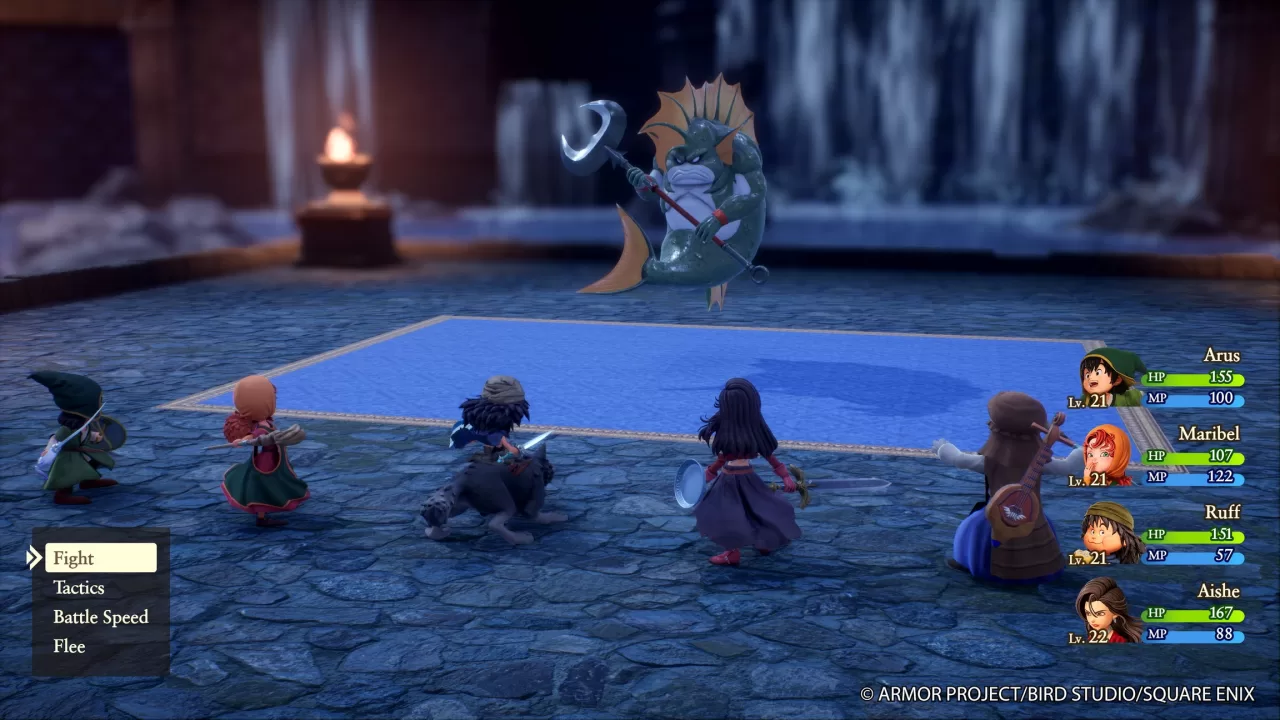
If you ask me (and many other JRPG fans), the HD-2D style is a perfect fit for the remake of the original Dragon Quest games. This style retains their retro feel, while adding plenty of charm to boot. With Dragon Quest VII Reimagined though, you get an art style that is cute in its own way, but it does seem like there’s a lack of wow-factor when you’re playing.
That’s not to say it looks bad; it just didn’t wow me or grab me in the same way as the HD-2D remakes have. This might be partly because the 3D models of the characters can take some time to get used to. I’m not a big fan of how the characters look, but I can see them growing on me at least.
There’s also the fact that the game seems to look a bit soft and lacking in sharpness. This might be because I was playing a demo build, but again, for a game that’s technically newer than the HD-2D Remakes, I found this to look a bit plainer.
Of course, opinions on visuals will depend on personal preference, but based on what I’ve experienced, the new Dragon Quest VII remake’s graphics aren’t as beautiful as the HD-2D remakes.
Dragon Quest VII Reimagined Initial Impressions
I was only able to try out Dragon Quest VII Reimagined for a bit, and I can already say that this should be a more accessible entry to the classic Dragon Quest titles for series newcomers. This is thanks to its more dynamic combat, along with the fact that exploration is less of a pain because you can see enemies, making it easier to avoid them or to prepare for fights.
While the game’s visuals seem to have less impact compared to the HD-2D style of the other Dragon Quest remakes, this reimagining of DQ7 is still a promising title overall.
Dragon Quest VII Reimagined launches on PS5, Xbox Series X|S, Switch, Switch 2, and PC on February 5, 2026.