

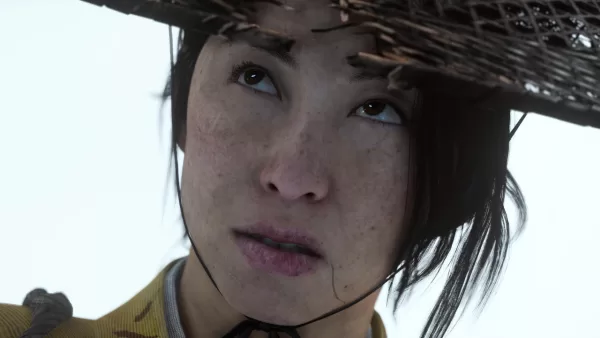
Ghost of Tsushima was a significant game for the PS4, and five years later, we finally have the follow-up, Ghost of Yotei. Instead of being a continuation of Jin Sakai’s story, Yotei moves on to a new ghost, complete with a big timeskip.
Unlike Tsushima, which takes place on a small island during the Mongol invasions of the late 1200s, Yotei’s story happens in the early 1600s, during the beginning of the Edo period. Instead of being set somewhere close to Edo (or Tokyo in contemporary times), this game is set in Hokkaido, Japan’s northern frontier. Meanwhile, the new ghost is named Atsu, and instead of defending her homeland, Atsu’s goal is to get revenge on the Yotei Six, a sinister group behind her family’s slaughter.
Given the game’s different story, setting, and time period, Yotei might seem like a major departure from Tsushima. And while it is in the aforementioned aspects, this should still feel familiar to everyone who has enjoyed Sucker Punch Productions’ previous game.
More Ghost of Tsushima, Essentially
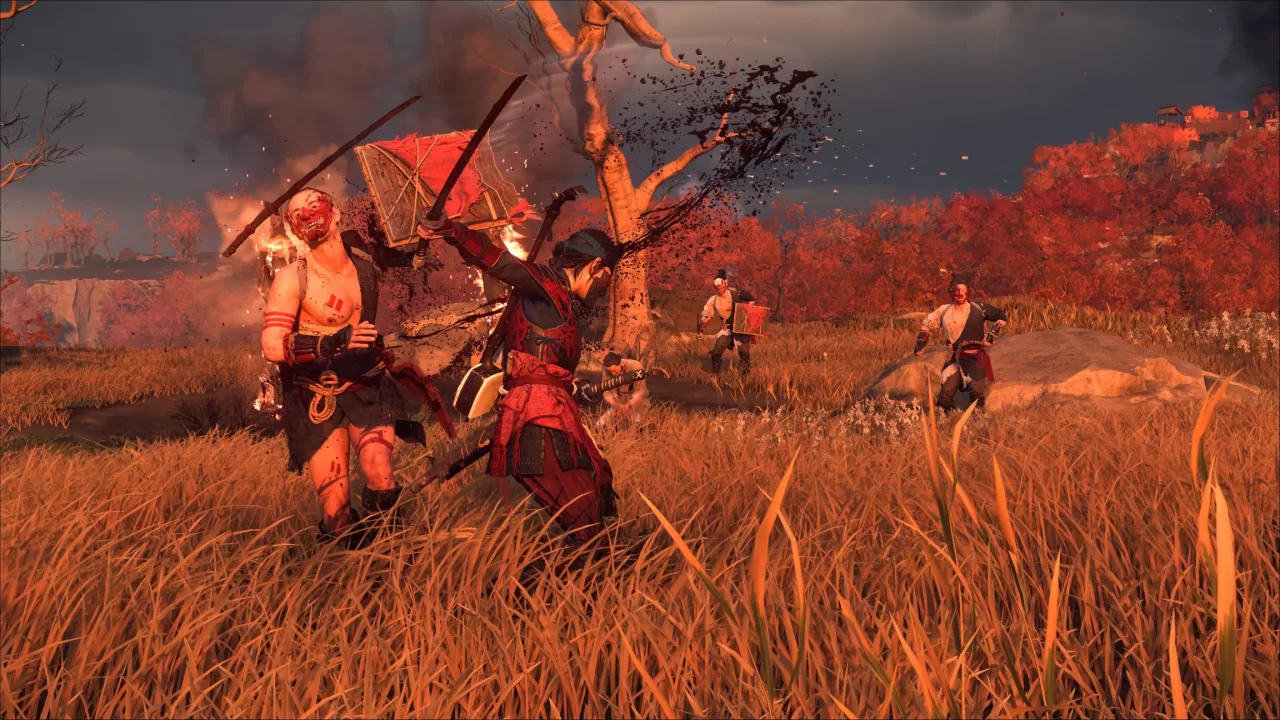
In our Ghost of Tsushima review back in 2020, we mentioned that the game’s combat was quite good, as it featured satisfying swordplay, even though it doesn’t exactly redefine the action genre. For Yotei, Sucker Punch didn’t change much at the core, meaning the core combat flow and mechanics are mostly the same.
As such, you can expect missions in this game to consist of various combat encounters where stealthy assassination is the way to go to thin out groups, after which you can proceed to challenge them in straight-up combat. Of course, you can try stealthily dispatching everyone, or jumping in with your sword drawn at the start and whacking at enemies until their stagger meter breaks. Healing also works the same, as Atsu has a spirit meter that fills up when she takes down enemies. Spirit is also consumed when using abilities.
What is different this time is the fact that Atsu has multiple weapons at her disposal. While Jin only had one katana, which he could use in multiple stances, Atsu does not have stances. Instead, Atsu can switch between one of five weapons: katana, dual katanas, yari, kusarigama, and odachi. How this works is that, instead of choosing a stance against enemies with certain weapon types, Atsu will need to switch to a weapon that counters an enemy’s weapon. The wrinkle here is that you often find yourself faced with a group of enemies that wield different weapons; that’s not even counting the enemies that switch weapons in the middle of combat.
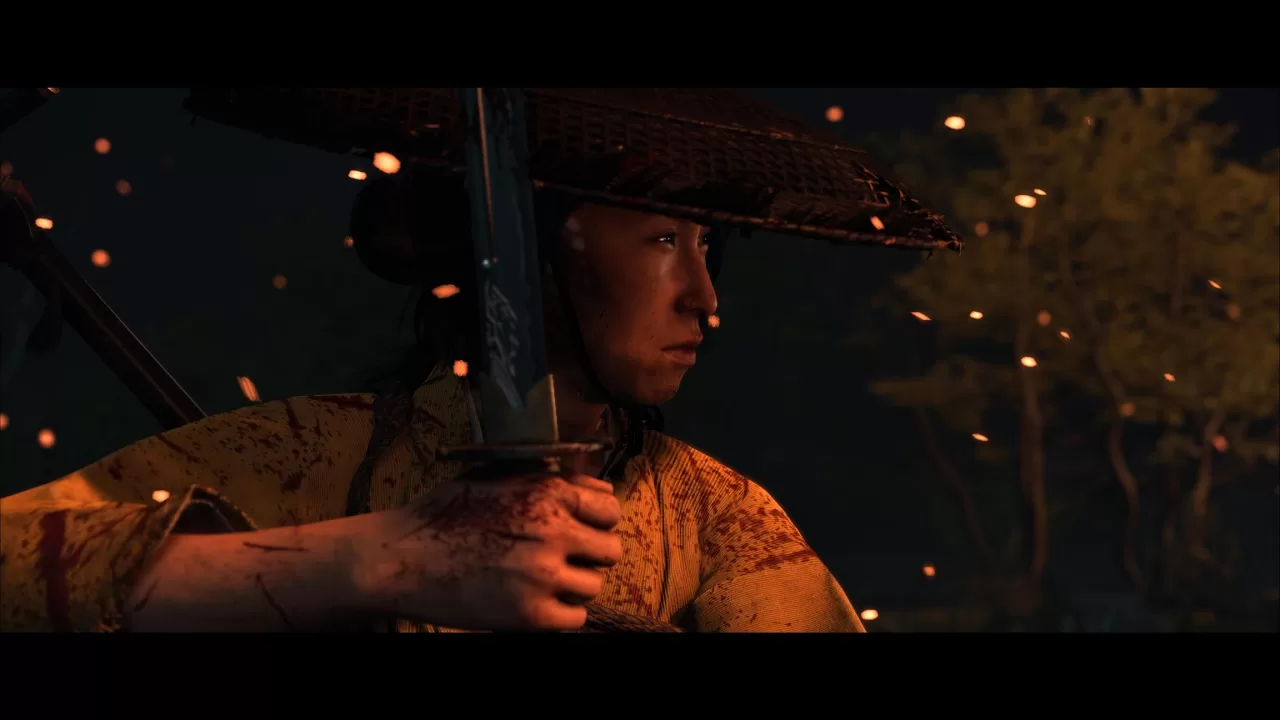
Aside from these melee gear, Atsu also has a bunch of ranged weapons to choose from. The bow returns along with some useful throwables like bombs, but these are now complemented by a kunai to temporarily stagger enemies, along with a tanegashima (an old-style rifle) that packs a hefty punch, but is loud and incredibly slow to reload. Using these ranged weapons along with Atsu’s melee gear is key if you want to get through the game’s various quests and combat encounters.
Adding to these are the fact that enemies have unblockable attacks that can be parried (marked by a blue effect), attacks that can’t be parried and must be dodged (colored orange), and attacks that can disarm Atsu if it lands (Gold-colored attacks). When facing an enemy with a disarm attack at the ready, Atsu must quickly hold and release triangle to counter them, lest she be disarmed – an annoying occurrence as you’ll have to scramble to get back your weapon.
Given the enemy weapon variety, coupled with the sheer number of weapons and items at Atsu’s disposal, Ghost of Yotei can feel more hectic and even a bit more challenging than Tsushima. Of course, the normal difficulty doesn’t come anywhere close to something like Sekiro (especially given the generous checkpoints and near-instant reload times), but in this regard, Yotei is satisfying. This is especially the case with the game’s duel boss fights. As with Tsushima, some of my favorite combat moments in this game come from the Duels, specifically the Tales, which are sidequests that give major rewards like armor.
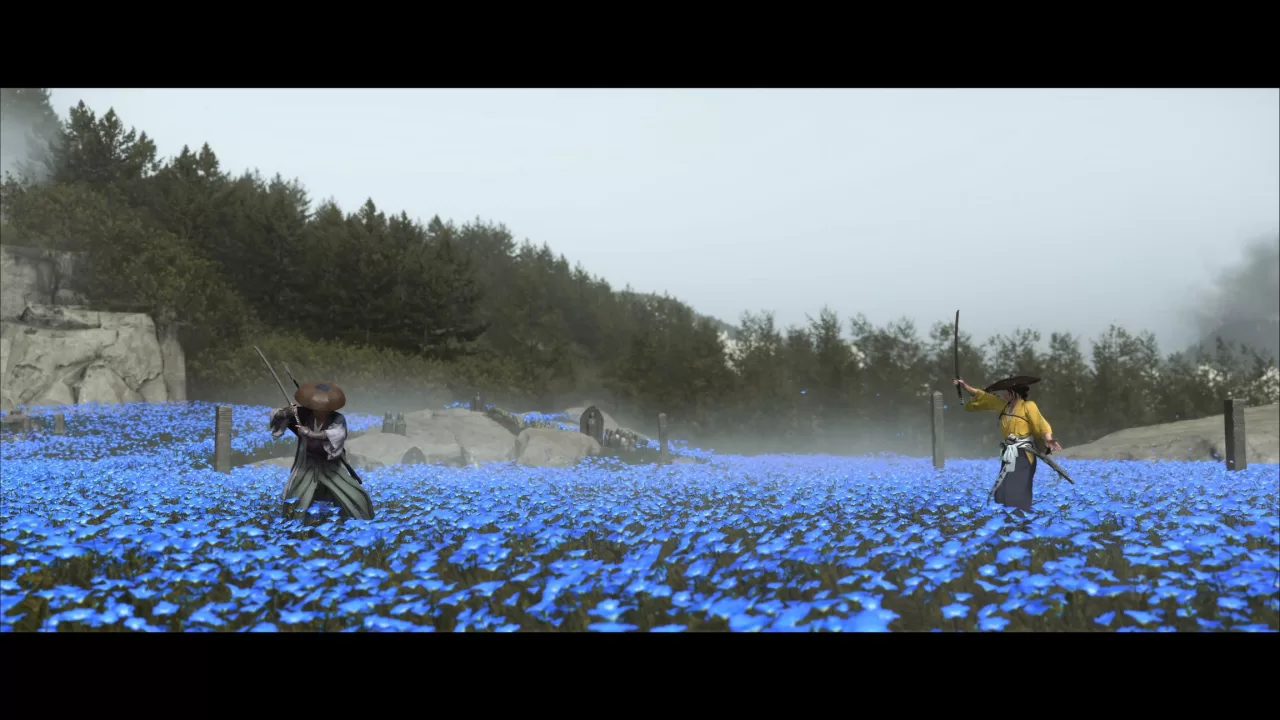
In a similar way that Death Stranding 2 refines instead of redefines the gameplay of Death Stranding, Yotei is also an expansion and refinement of Tsushima’s combat. It’s just a shame that the enemy AI still leaves a lot to be desired. To put it harshly, enemies are still dumb, nearly deaf, and probably legally blind. Like Tsushima, stealth can still trivialize enemy camps because of how easy enemies are to dispatch quietly, especially when Atsu gains more powerful gear and the Detective Vision-like skill that Jin also had.
This isn’t a massive knock on the game, of course, but it would’ve been better if enemies at least had a bigger cone of vision, or at least were easier to alert. You can sort of fix this by bumping the difficulty up, but even then, they’re not particularly sharp. It also helps that you can forego stealth if you want a more challenging experience; simply do a standoff whenever you see enemies to at least thin out their numbers a bit.
You’ll be doing a lot of combat in this game, but what you’ll also get plenty of time with is exploration of the game’s open world. In this regard, Yotei once again takes plenty of cues from Tsushima, but a key improvement is that the game’s familiar open-world mechanics now feel much more open and organic.
A More Open Feel
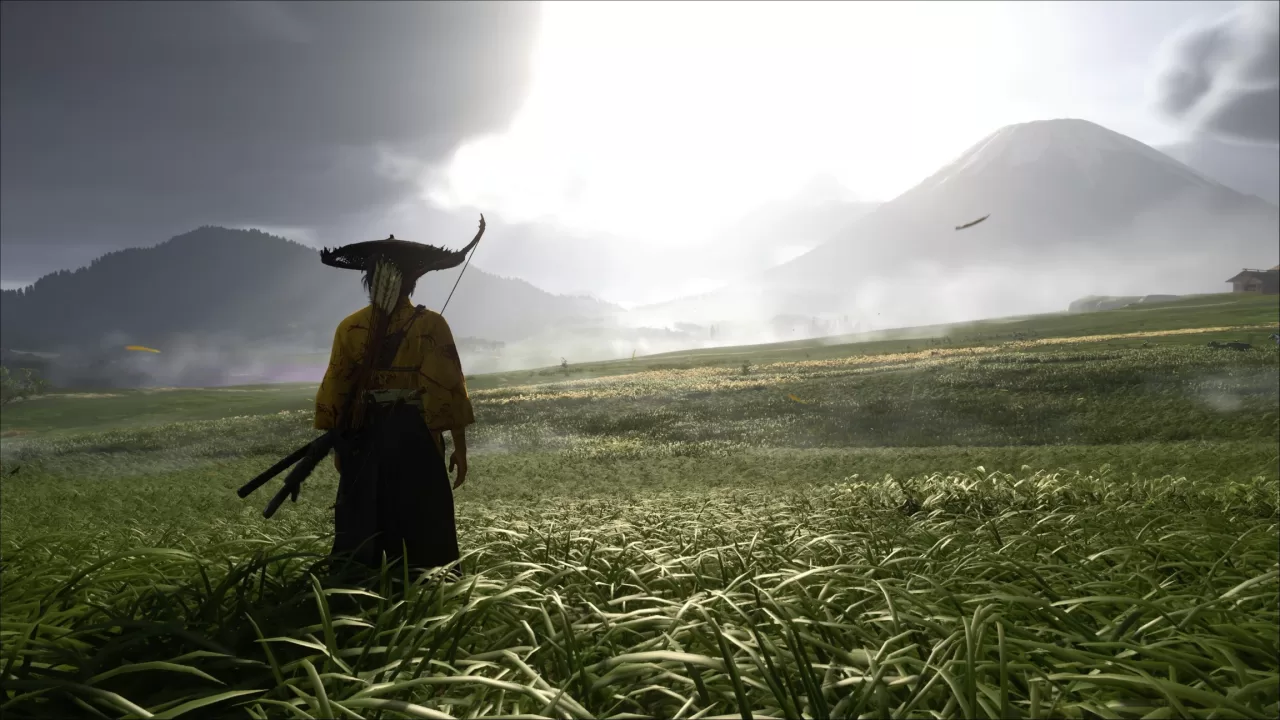
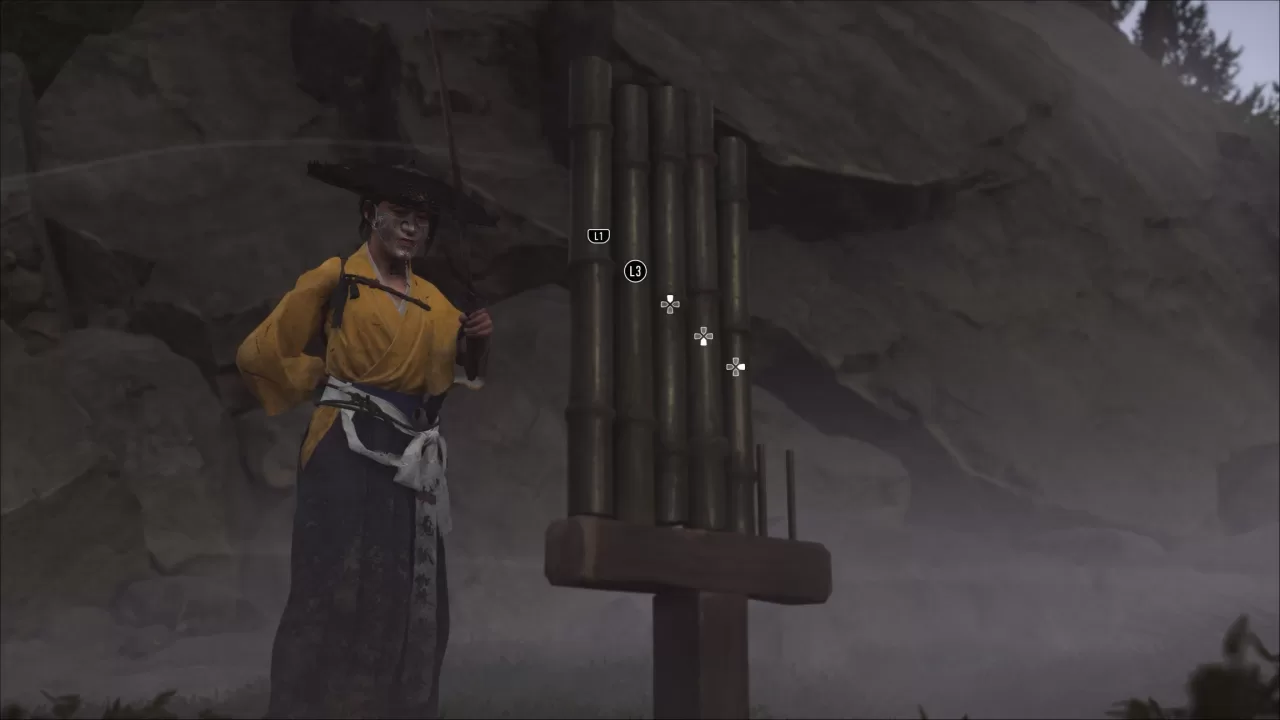
Much like gameplay, the open world elements of Yotei are still essentially the same as in the previous game. Atsu must seek out bamboo strikes to gain more spirit, hot springs to increase her health, and Shinto shrines to get new charms. There are some differences, like how Atsu can unlock more abilities by finding Altars of Reflection instead of gaining Legend points. These altars are found throughout the map and in enemy camps. This makes the game’s leveling system” more tied to exploration.
In that sense, Atsu gaining more abilities feels more organic. This is also the case with many of the game’s open-world elements. For instance, quest tracking isn’t done with a journal; instead, Atsu has a deck of cards that essentially function as quest markers. This deck is shown on the bottom left corner of the map, making checking the available quests more tied to the game’s exploration aspect.
It also helps that many of these quests unfold quite naturally, all without feeling like obligatory things to do so that Atsu can get stronger. In fact, I happened upon many of the game’s memorable quests simply by exploring Hokkaido. One example was when I was going to a main story quest while following the guiding wind (the marker/compass system that makes a return in Yotei). While galloping through a plain, I saw a pagoda in the distance. I did not get any quest marker or info about what’s there, but the way it looked made me curious enough to go. Upon arriving near the entrance, I see one of the game’s NPCs who proceeds to tell a story. It turns out that I stumbled upon one of Yotei’s most memorable quests (which I won’t spoil).
During my Yotei playthrough, this kind of thing happened a lot. While Tsushima was already a step above a typical open-world game, Yotei improves upon this by integrating the “obligatory” enemy camps and side quests more naturally with the world. To get the best out of this though, you may want to keep fast travel to a minimum to allow more moments like these to unfold.
It’s not just the miscellaneous open-world stuff that gets this treatment though, as the game’s story also has a choose-your-own-adventure feel to it, at least at the start.
In the Ghost of Yotei State of Play back in July, it was mentioned that players don’t have to defeat the Yotei Six in a particular order. While the final game isn’t open enough that you can pick which member of the six to hunt first, the opening parts of the game do feel remarkably open. That’s because, unlike Tsushima where you only unlock parts of the map when you progress through the story enough, in Yotei, the whole map is basically open at the start.
After the prologue, Atsu will get some leads on how to pursue the Yotei Six, but she’ll get more as players explore. As such, most players will likely have three main quests active during the early hours of the game. These quests each lead to a certain part of the map, none of which are closed off. Thanks to this, players can explore the entire map without making much story progress. This is quite nice as it makes Atsu’s revenge journey feel like something the player has complete control over.
Of course, there is a sort of recommended path that players can take, but the game doesn’t exactly insist on this. Though by the time you get to around the two-thirds mark, the storyline becomes more linear. You’ll still explore open areas, but at this point, you can expect the main quest to happen one after another, with no option to choose which to do.
I would’ve liked to see the later parts of the story retain the same feel as the first two-thirds, but that’s just not possible given how the story unfolds. What is a bit more of an issue is how the openness of the game’s main and side quests can make for a disjointed experience. For instance, I found a victim of a rather grisly attack near some woods, and while I got a quest prompt for it, I quickly forgot about it as I wanted to progress the story. After some time, I returned to the forest area, and the victim was still there, with the quest treating it like the attack was still fresh.
This might be an unfair criticism given that this is an unavoidable issue in open-world games. It’s just that, because of how nice the openness of Yotei feels, moments like these can become a bit more immersion-breaking.
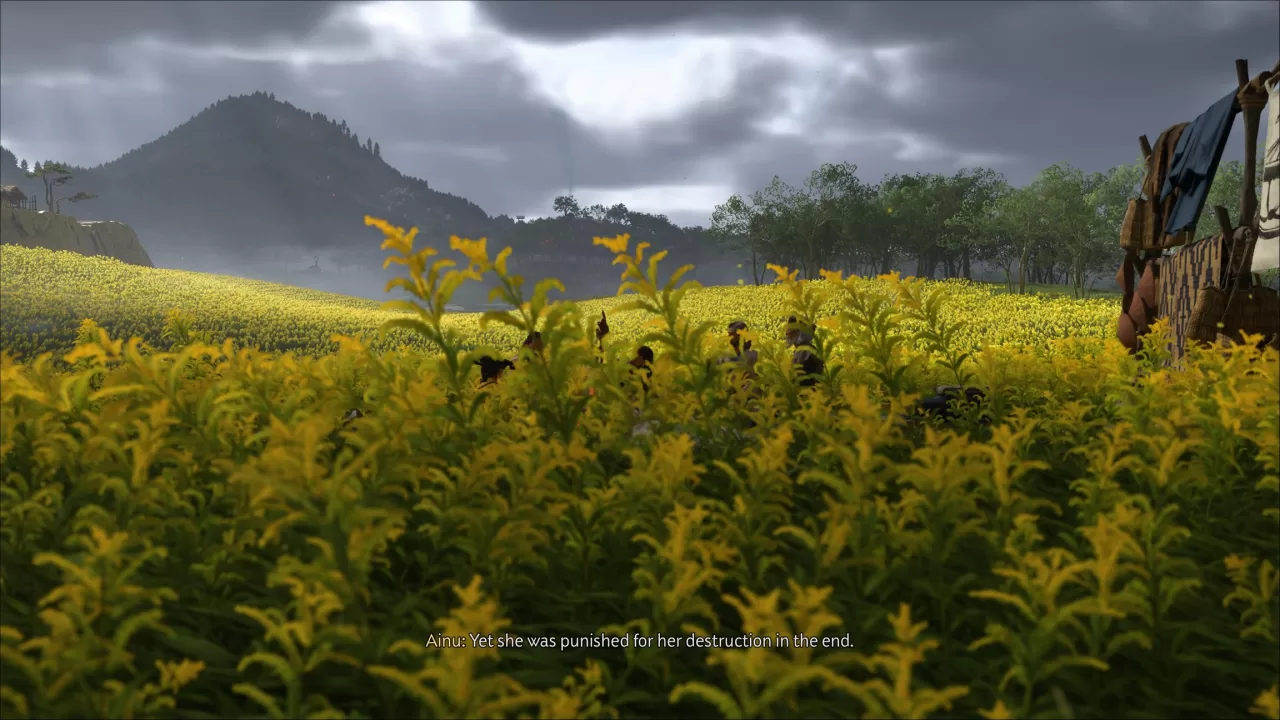
On a similar note, the game’s visuals can also look a bit uneven. While playing Yotei, I found myself stopping and being in awe of the visuals at many points. During these times, I almost always opened photo mode to compose a shot that I liked. On the flip side, there were moments that Yotei looked more like a PS4 game than something exclusive to PS5. Sometimes, textures on surfaces like rocks just looked unnatural, while there was some foliage that looked blurry and out of focus. At best, the game looks like an excellent PS5 showcase, but given how uneven the visuals can look, Death Stranding 2 is still king on the PS5 in the graphics department.
These don’t make the game look ugly by any stretch, as it’s still an upgrade over the original Ghost of Tsushima in many ways. Even though the game’s visuals look improved, what’s interesting is that Hokkaido in Yotei doesn’t look all that different from Tsushima in terms of colors and visual style. In fact, Hokkaido feels more like a bigger Tsushima instead of the massive landmass that it actually is (it may have been better if they had only used a certain section of Hokkaido as the map). What is different is the story as Yotei has more deeply personal stakes.
Atsu’s More Character-Focused Story
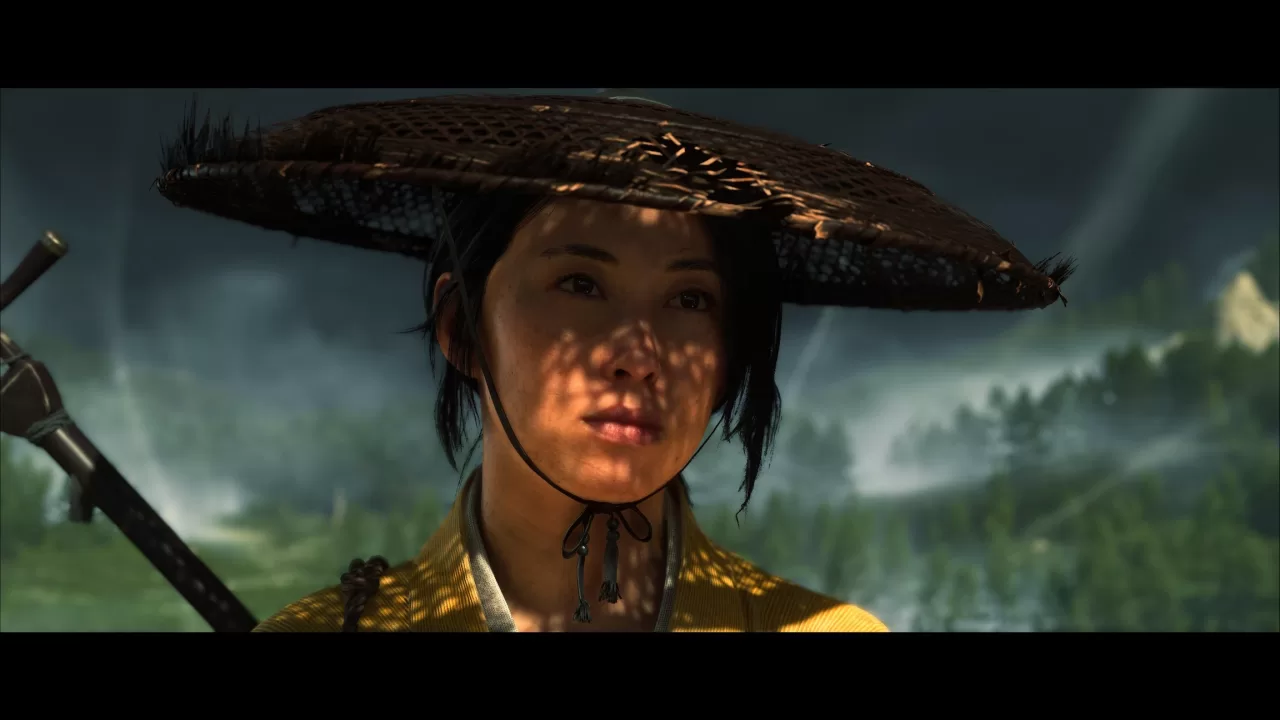
Jin’s story was personal, of course, especially as his Clan is a key component in the story. Still, the driving force of his game was the Mongol invasion. In Ghost of Yotei, Atsu’s goal is revenge. Sure, she helps people along the way, but she doesn’t exactly do this out of the kindness of her heart. Instead, she helps people mostly to further her goal.
That’s not to say that Atsu is a boring character, far from it. I found Atsu to be an interesting character, especially when the story opens up and more characters are introduced. Because the game’s story puts her revenge story front and center, you get a strong sense of who she is and who she becomes as she continues her quest. It helps that Atsu’s English and Japanese voices portrayed her excellently (meaning you can’t go wrong with either voice option).
It’s worth noting that, story-wise, Yotei does feel a bit flat during the opening hour or two, especially when you compare it to the epic and gripping opening of Tsushima. Even though the story might not seem all that compelling at the start, it definitely gets better as you explore more of the world and meet the other key characters.

Even though the focus of this story is on Atsu, Ghost of Yotei still has some big stakes, with some equally large battles to boot. Still, if you ask me, the stakes don’t really feel as big as the Mongol invasion in Tsushima. Thankfully, Atsu’s revenge story is enough to carry the story’s momentum, for the most part.
The game does have a satisfying conclusion, though the last third of the game does feel a bit rushed, with quests feeling like they’re happening just so we can get to the finish line. And while the finale (and the boss fight) is quite good, the actual final level can feel a bit underwhelming.
Thematically, I’d say Yotei is just as strong as Tsushima. While Jin’s story tackles honor and the samurai code, Atsu’s tale centers more on revenge and its price. The way it tackles this theme may not hit as hard as something like The Last of Us Part 2 (which had a similar theme), but it does explore it in an overall interesting way.
Ghost of Yotei Final Verdict – 8/10
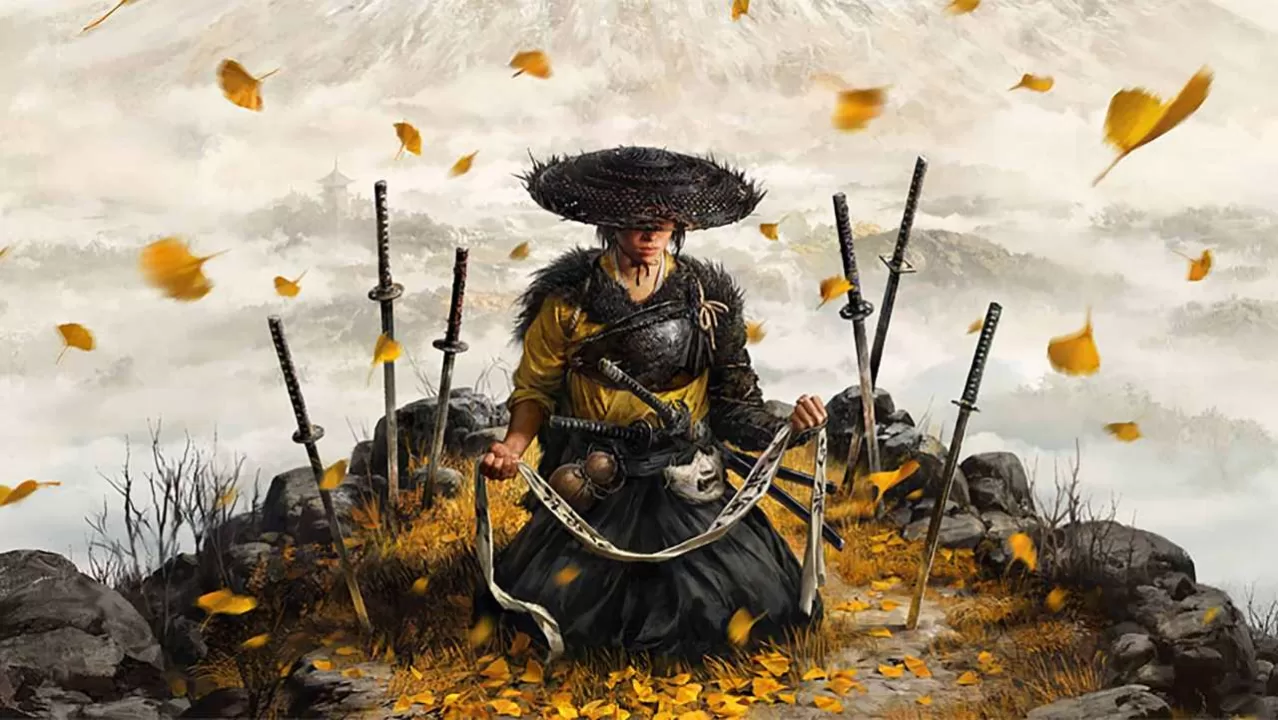
After 30+ hours with Ghost of Yotei to see the credits roll, it’s fair to say that Sucker Punch delivered another great open-world samurai game. While it doesn’t exactly shake up Tsushima’s formula that much, it adds enough new weapons to make for more dynamic combat encounters. The open feel of the world and the main storyline are also standout aspects of the game. Plus, the story is quite compelling.
Sure, there are areas where we would’ve liked to see some improvements (like the visuals and some unevenness in the story’s pace). But overall, Ghost of Yotei is a worthy follow-up to Ghost of Tsushima, making it well worth playing for PS5 owners looking for a meaty new open-world game to jump into.
[This review was made via a PS5 game code provided by the publisher.]