

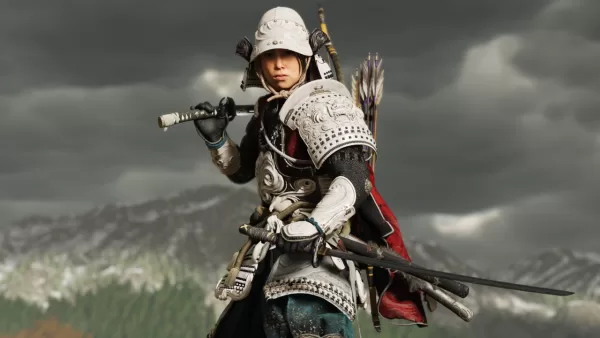
Since the release of Ghost of Tsushima, we’ve seen plenty of games set in Japan, and regarding this, the developers over at Sucker Punch are happy with this development. That’s based on our recent chat with Sucker Punch art director, Joanna Wang, ahead of the Ghost of Yotei launch.
Recently, we got to attend an online roundtable interview with Wang, and one of the things we wanted to ask was how the team felt about the rise in games set in Japan. After all, since the release of Tsushima in 2020, we’ve seen some big titles like Assassin’s Creed: Shadows and Rise of the Ronin. When you expand the scope to non-open-world games, there’s also the Like a Dragon: Ishin remake, among others.
In response to this, Wang said:
“I am happy to see more Japan-themed games. I’m always a big fan of [them]. We are excited to see more love put into things like Japanese samurai films and Feudal Japan themes. I’d love to see that.”
From the looks of it, instead of feeling the pressure, she and the rest of the Sucker Punch team are happy with the increase in the number of feudal Japan-set games.
Of course, there’s also the fact that Ghost of Yotei has an ace up its sleeve in the form of its setting. To be exact, this game takes place in Ezo, or Hokkaido as it’s known now. If you think about it, there aren’t a lot of games set in Hokkaido. Narrowing it down even more, you’ll be hard-pressed to find a game set in Hokkaido during the early Edo Period.
Wang shared:
“We are also excited about Ghost of Yotei, to bring something new to the mix of all the hype around those Japanese-themed games. We are able to explore something new [story-wise] with Atsu, and a new place, and a different side of Japan [in Ezo], and bring it into a modern-day video game.”
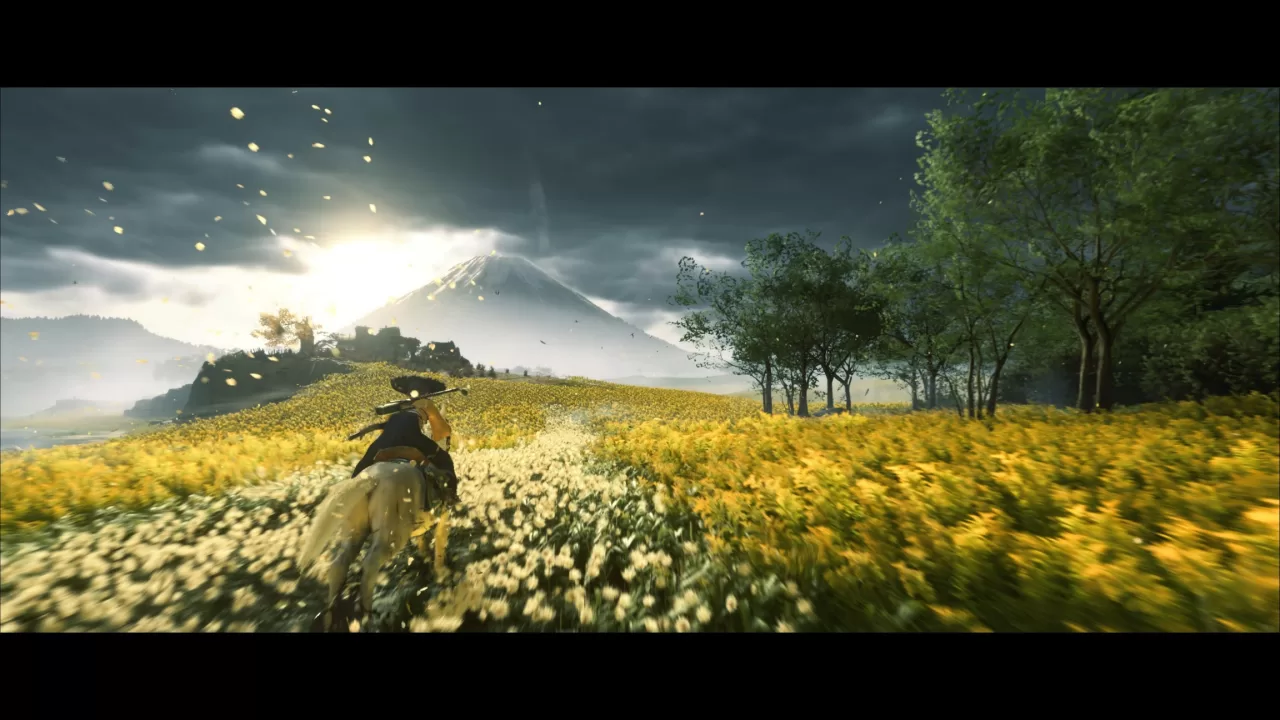
Hokkaido is such an interesting setting, not just because it’s a beautiful place. There’s also the fact that it was thought of as a wild and untamed land during the Edo period. As such, only the southern tip of the island had any form of permanent settlements by mainland Japanese during that time.
In that sense, Yotei’s take on Hokkaido isn’t entirely accurate. After all, the game features some structures (like shrines and inns) that, historically, didn’t exist north of Hakodate back in the Edo period.
This isn’t too surprising, as the team’s goal wasn’t to make a 100% accurate depiction of Hokkaido. Instead, they wanted to make the world fit with the gameplay and the story that they wanted to tell.
Wang shared their approach as:
“We’re not making a one-to-one historical recreation. Instead, we’re creating a fictional version of Hokkaido, or Ezo, during that time. The map is huge, right? We can’t make it one-to-one in size. The game would be way too big. So, we work around it: choosing interesting landmarks, weather, and visual elements, and then picking and shaping them so the map flows in a way that works for our story and for the player. That way, the player can still feel the space, the sense of a massive land.”
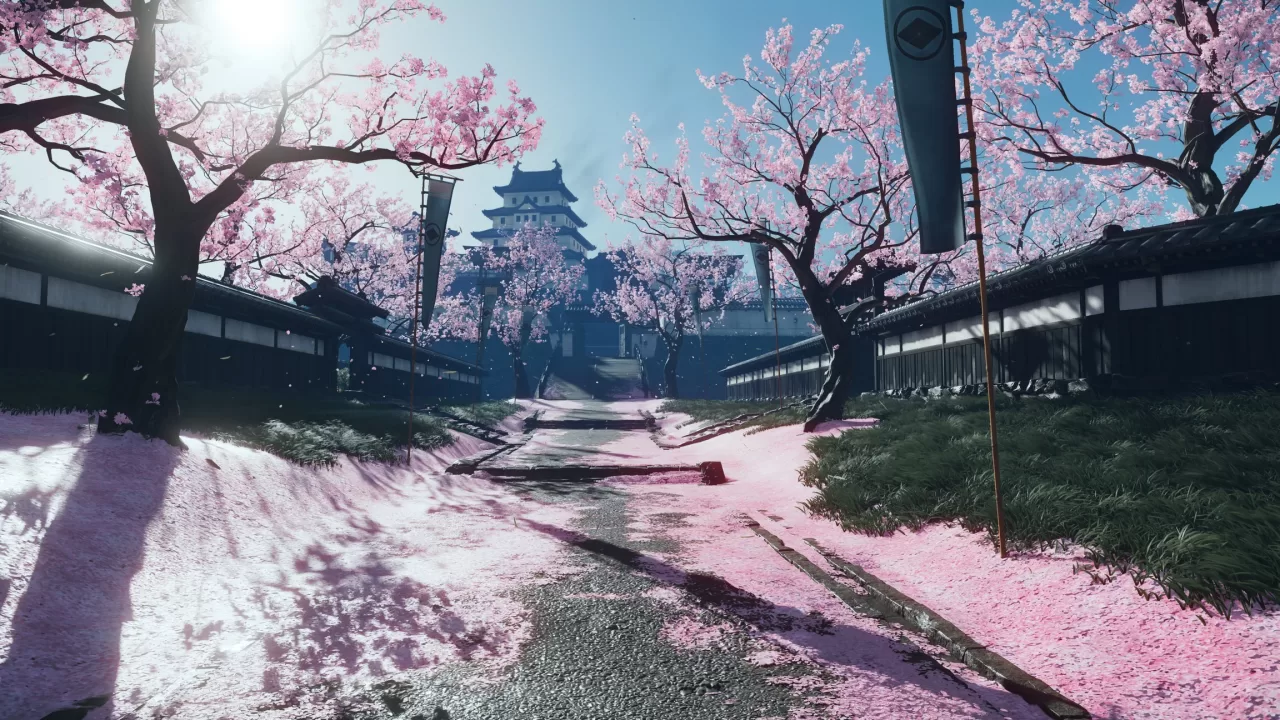
Of course, while a one-to-one recreation wasn’t their goal, the team still wanted to balance making the game accurate in some regards, especially when it comes to the game’s cultural aspects.
As such, balancing between creative license and respectful realism was something the team had to consider. Wang shared how they went about this balance:
“I often say it feels like we’re standing at a crossroads. On one side, we have culture and the responsibility to face how the real place is. On the other hand, we have gameplay design, making sure the flow and mechanics are good. Then there’s the artistic, creative choice, how to represent the place in a way that’s striking and beautiful. Like you said, the foliage is very memorable. And of course, we also face technical limitations. So, at that crossroads, we try to merge everything together, and in the end, we find a balance.
We’re also lucky to have Japanese advisors working very closely with us, basically a whole team. They’ve been with us since way back, even during the early Tsushima days. Something as simple as writing a name on the map in kanji, we had no idea how it should be done, and we needed their guidance. They’ve been essential in helping us.”
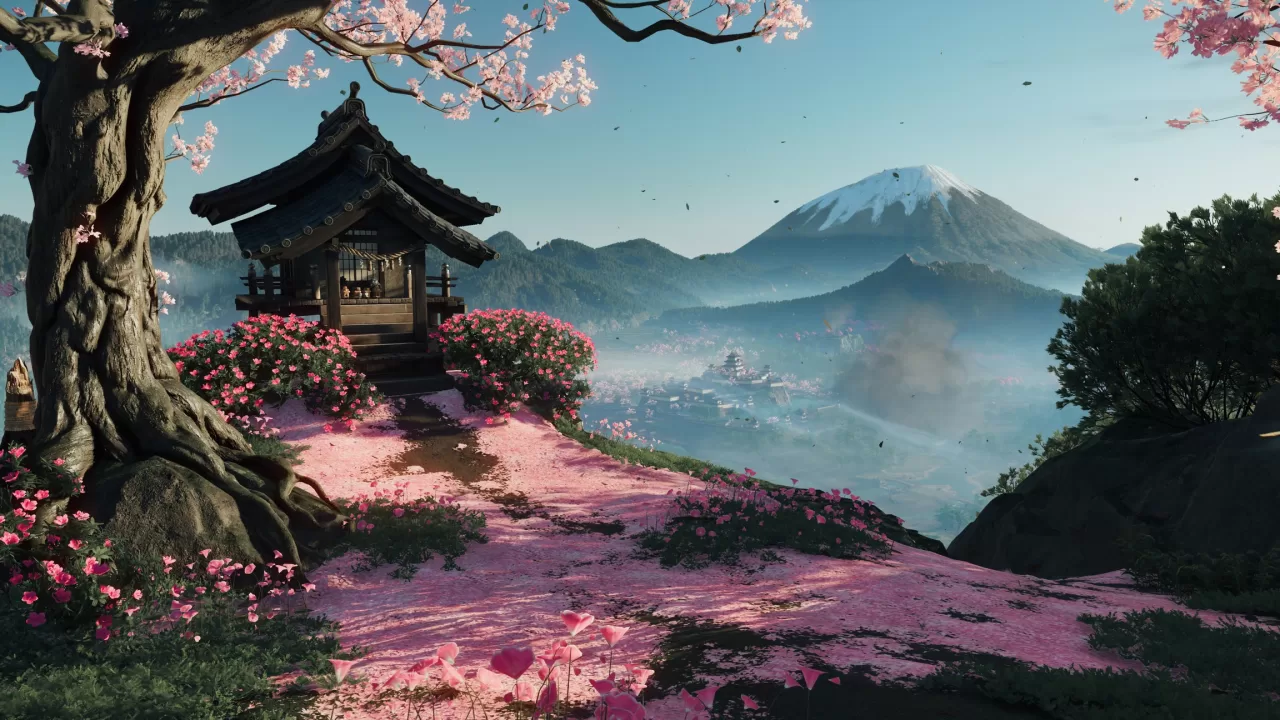
In this regard, we think Sucker Punch has done a great job in balancing these aspects. Unless you’re nitpicky about history, their take on Hokkaido should delight in terms of visuals, as well as gameplay. After all, in our review, we praised the game’s more open feel when it comes to exploration and how the story unfolds.n
Ghost of Yotei launches for the PS5 on October 2, 2025.