

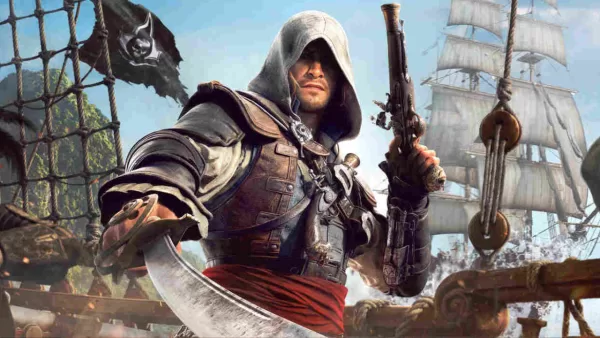
On the day of the Assassin’s Creed Black Flag Resynced launch, we got to chat with the game’s Lead Producer, Justin Ng, and Creative Director, Paul Fu.
It’s fair to say that Black Flag Resynced is a major release, not only because fans have been clamoring for a Black Flag remake for years now, but also given that it’s the first-ever major AC title that was developed by an Asian studio at the helm.
Having Ubisoft Singapore take the lead in Black Flag Resynced makes sense, given the studio’s experience with naval combat, along with the fact that many devs in the studio have worked on the original game.
Given this, we asked Ng and Fu about what it was like to remake such a beloved series entry, as well as how its other works (like Skull and Bones) have influenced it.
[The following is a full transcription of our interview with the developers, edited for clarity.]
Were there any elements in the original that you felt were a bit underrated and that you hope players will engage more in Resynced? What changes did you make to make it more interesting?
PF: For me, it was the warehouses, otherwise known as the plantations. I felt they had a lot of character. They represented the pirate life; they represented the factions that existed at the time. But they don’t always have a story. Some of them had a very lively story, but others seemed to just add a bit of flavor. That really helped boost what I liked about the original game.
And yeah, it just felt like they were separate islands and locations, sometimes pretty far away, and people might not necessarily pay attention to them. But I think they were some of the greatest parts of the original Black Flag.
JN: Adding additional content in different places, especially for players of the original game. Most of the areas were just copy-and-pasted. But with the new game, Resynced, we took that as an opportunity to add more treasure and more hidden elements in the world. So it feels like you’re a pirate roaming the seas and finding treasure in new places.
There are some new stories here and there, which are very enjoyable for me. It’s very surprising. Even the diving area opens up so much.
What was the intention behind AC4 being the first full-fledged remake of the franchise? Why not start with the original trilogy?
PF: For me, the answer is really quite straightforward because I really love Edward Kenway. He’s one of my favorite AC protagonists, and he’s a big part of my career, a big part of my life. I have a lot of wonderful memories working on the original Black Flag. So it’s always something we thought of, and there were many missed opportunities back then that we wanted to fulfill but never did.
At some point, the question of remakes popped up. And because at Ubisoft Singapore, we worked on a lot of naval content and on the previous game. We thought, why not take this project? It just felt natural to us.
On that note, what were some of the biggest missed opportunities for you with the original game?
PF: ‘Dive anywhere’ was one of them, actually. I even have a video of the original prototype where you could dive anywhere. A prototype is not hard to do, but when it comes to shipping the game, we had to worry about performance, props, and NPCs. It was very technically challenging back then, so we dropped it quite early for safety. But now we can do it.
Also officers. We talked about having officers since AC III, but we never managed to really do it. We thought of them as a bunch of side quest lines, additional story, named characters, voice characters. We never really did it, even though there were technically officers on the deck in III and IV. But for this game, we have three new officers, and each one of them has their own quest line. I’m very happy about that.
JN: The only thing I would say is that I think it’s natural for the Singapore studio because it’s the naval team, so it makes sense.
Would you say that you used the skeleton of Skull and Bones for this project?
JN: Actually, we didn’t use Skull and Bones.
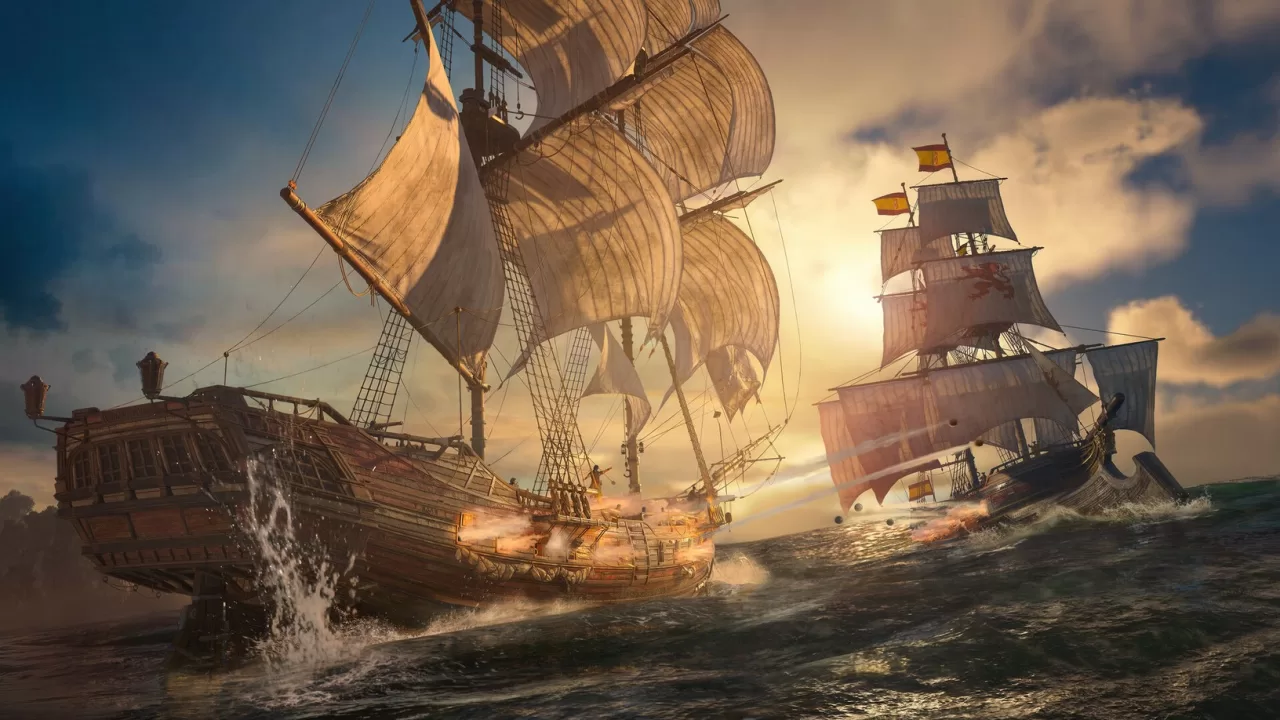
PF: A lot of people ask us that question. To be precise, Skull and Bones is a branch of the AC Valhalla technical branch. Development started from the AC Valhalla code base. The development of Resynced started from the Shadows code base, which meant we had almost zero naval content. We had floating static ships and boats you could sail, but that was about it.
Even the physics had to be completely recreated, because physics on big ships are not the same as physics on small ships. You have storms, you have Beaufort, so they are two very different threats. Even the core combat philosophy is different.
The first kind I know is 360-degree first-person aiming. In Resynced, we returned to the original AC III and AC IV quadrant-based aiming. That means there are blind spots specifically added to challenge the player to turn, and this is unique to the AC franchise.
JN: I think a lot of the experience from the devs on Skull and Bones helped as well. Some of the secondary fire mechanics, some of the mortar changes, those were learnings from Skull and Bones. We took some of those design concepts and made them work for AC.
Was there anything from Skull and Bones that made the remake process for Black Flag Resynced easier?
PF: It was really mainly conceptual from Black Flag, and technically from Shadows. So it’s quite different. We did gain a lot of water tech knowledge from Skull and Bones, that one for sure. But we had to recreate it.
What was the reason behind the direction to reimagine key areas in the game? What was the core design principle in mind when creating the new levels here?
PF: Most of them were based on the old areas. Early on, Julien, the world director, and I had a discussion about the degree of change we were allowed to make. In general, the maps would remain, but the props and how we placed the parkour ingredients might change here and there, because of modern tastes, or new mission needs, for example. That even led us to create new areas, as you probably know.
For the new areas, the designers were simply allowed to go wild with what they wanted to do, and they built them based on mission specifications or content specifications.
JN: I think the new areas are also there to increase that sense of exploration. That’s what the brand has evolved toward; being able to provide players with a massive world to explore. Having those new locations adds surprise for returning players as well.
Was there anything from the original that you really wanted to change but ultimately chose not to?
PF: Not for me, but for John, the original creative director. We had a chat about it. They did think about changing the combat from AC III to AC IV, but they decided not to.
AC IV had many challenges. In John’s vision, it had to be very seamless. You needed a huge 16 by 16k world with a level of seamlessness and streaming that had never been seen before, like Underwater. There were many dimensions to this new AC game. It was a huge jump from AC III to AC IV.
They felt that investing heavily in combat at the time would probably distract them from the main task of making a pirate game. So they decided to keep it close to AC III, with some changes here and there.
As the inverse of the previous question, what was something from the original that you were really excited about changing or improving upon?
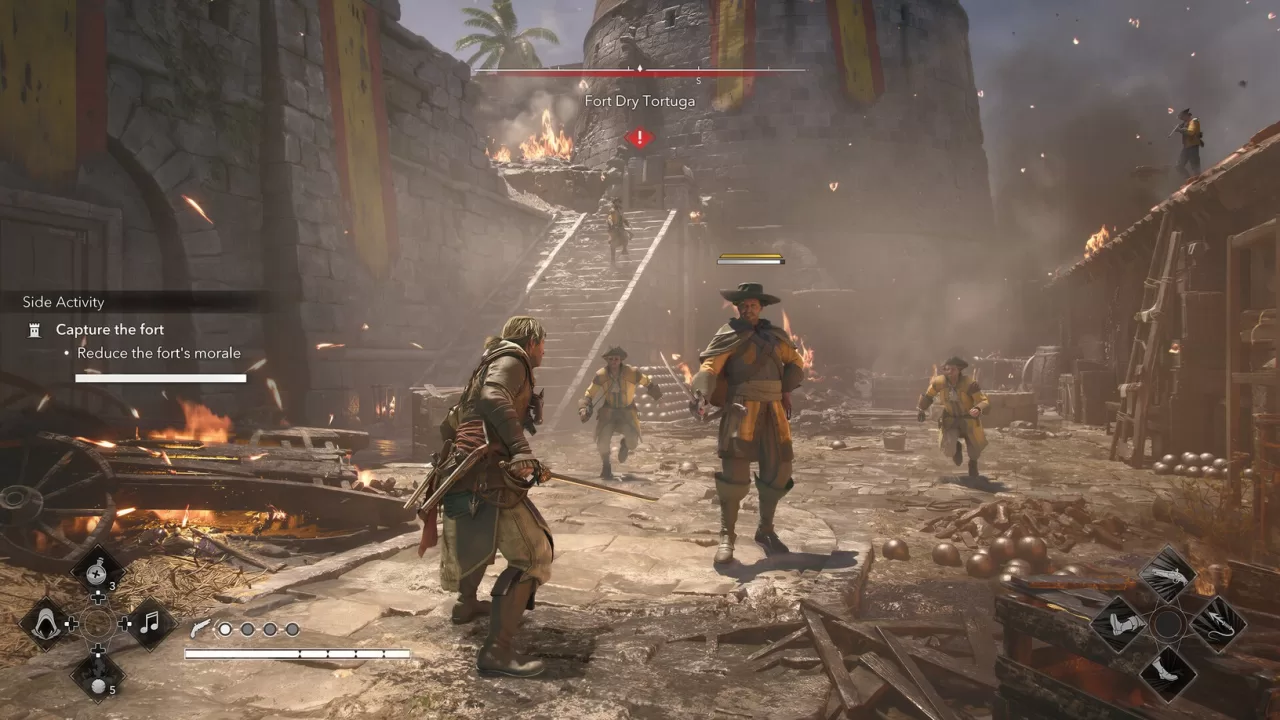
PF: The combat. Because I knew about this story from John, and because I’m a fighting game fan myself, we felt we should modernize combat. We pushed very hard to provide a strong, action‑driven, flowchart‑driven fight direction for the team, and I think it paid off really well.
JN: I think the fight as well. Also the crouch anywhere. I think that was the first thing we did.
PF: The destructibles too.
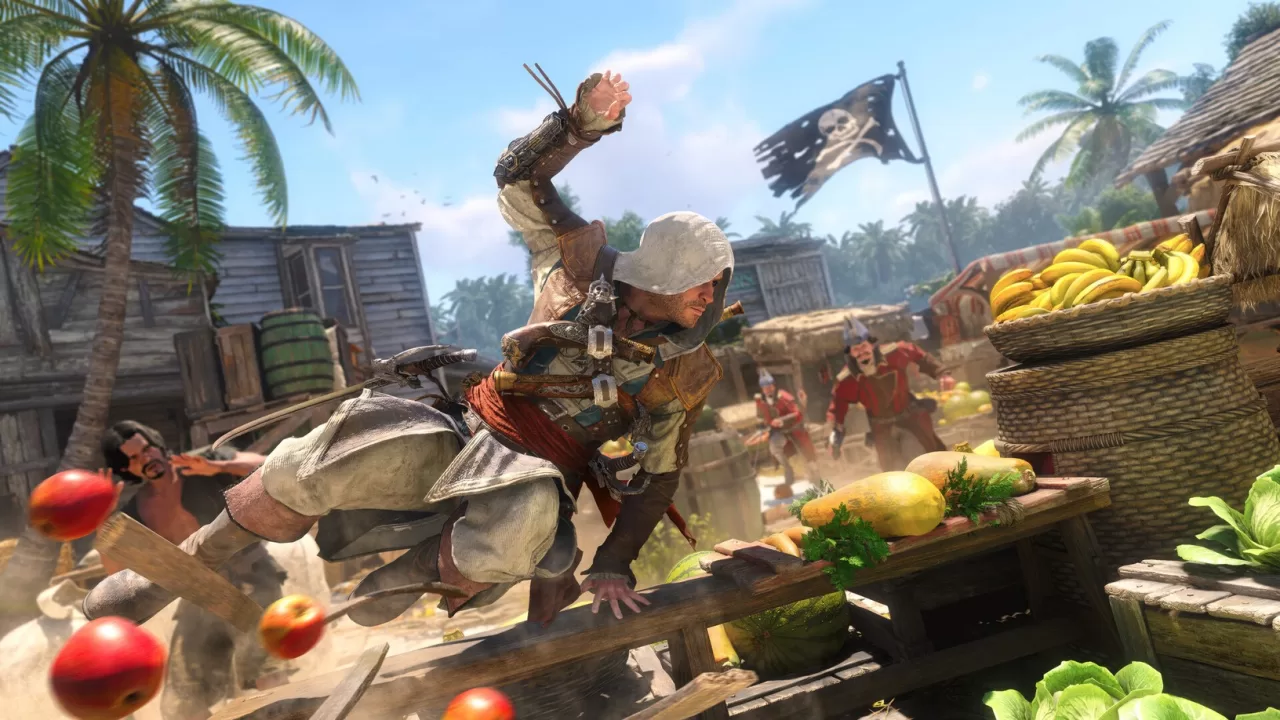
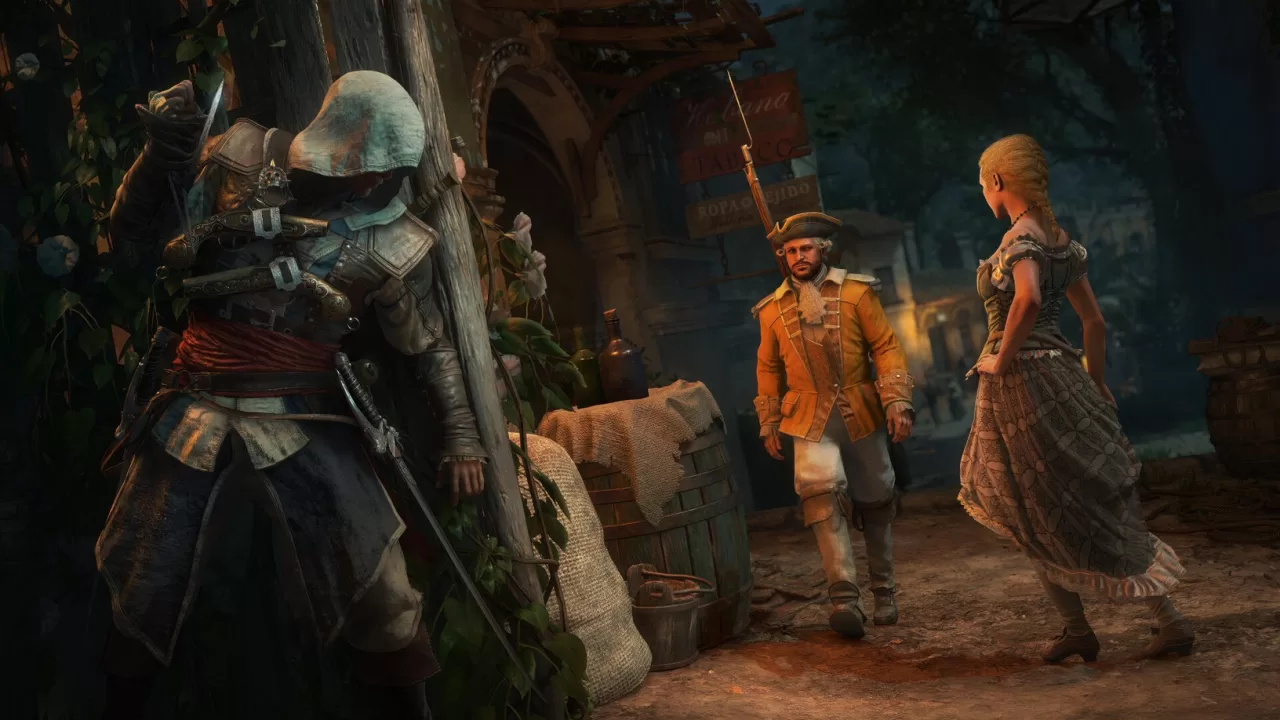
JN: Oh yeah, I love destructibles. At the start of the project, we didn’t actually have them, but as Shadows evolved, we saw the potential and pushed very hard to bring them in. The really cool thing is that destructibles add life to the Caribbean and Havana. But the team also made them usable for gameplay. So, you can kick enemies into destructibles, you can roll them down into destructibles. I was like, hell yeah!
I think someone mentioned it; there was a three‑minute video, and 80% of it was just the lady going around kicking boxes and stuff. And I was like, ‘yeah, I did that too.’
What about Black Flag Resynced are each of you most proud of and excited for players to see/experience?
JN: I think the one I’m most proud of is what Paul actually said, the officers. I remember having this conversation about three years ago when Paul had the idea. I thought, ‘Yup, this is the perfect thing to add to the game.’ Because you spend time with the officers on the ground, you make use of your mechanics there, and then you recruit them to your ship. That builds on the narrative, and it’s super AC.
You get to know these characters, and then when they’re on your ship, they provide unique abilities that make your naval gameplay better. That loop really works very well. So when Paul said it, I was like, ‘Yeah, that’s worth spending money on.’
PF: The endings, plural. In the original, there was one ending, and then a sneaky ending at the very end. Now you have three more. There’s one endgame chapter, and they’re not mutually exclusive; you can experience all of them.
We added a new endgame chapter; there’s a new ending with Anne Bonny and Blackbeard, and there are two more side quests that also have endings tied to the original characters players love.
Assassin’s Creed Black Flag Resynced is available now on PS5, Xbox Series X|S, and PC.