

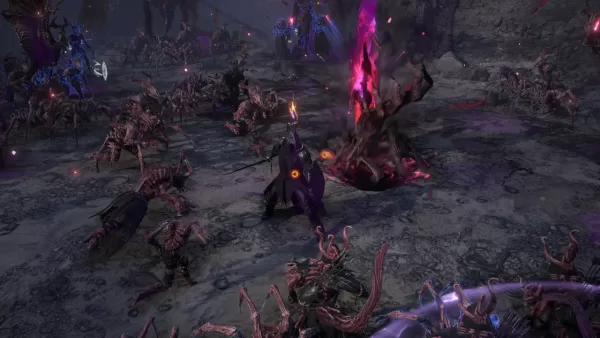
Ahead of the new Path of Exile expansion’s showcase, we got to have a chat with game director Mark Roberts, and he shared some interesting details about Keepers of the Flame, including their approach to Breach’s return.
When this new expansion was initially revealed with a teaser, plenty of fans got excited about the return of Breach; just look at the teaser’s comments section on YouTube for proof. Given this response, one of the things we asked Roberts was why they brought back Breach, and how they’re adding new elements to make it fresh, while still keeping the core experience familiar.
Along with this, we also asked Roberts about how they work on quality of life enhancements, especially considering how the new expansion also features some changes to give players a smoother experience (at least in some aspects).
[The following is the complete transcript of our interview with Roberts, edited for clarity.]
The return of Breach is something many fans are excited about. Why did you decide to return to Breach? Was it something you know fans want or something the team wanted?
MR: It was kind of a bit of both. But mostly, what it came from was this: in PoE 2, we did a kind of Breach endgame, which touched on what Breach looks like 25 years after the timeline of PoE 1. But then you’re left with this giant gap in between. Players were asking, ‘How did we get here? How did this happen?’ And I really wanted to fill that gap. It was something I saw players who had played both games talking about.
Another big factor was that we had already remade a lot of Breach monsters in PoE 2. We had created some bosses, we’d been working on the art for a while, and we realized, well, now we can use all of that in PoE 1. That let us evolve the storyline using these new monsters and bosses, some of which hadn’t even been released in PoE 2. By being able to reuse that art, we could do more. Instead of waiting for new assets to be made, we could focus on other things, like crafting systems and additional features, rather than just sticking to monsters and league content. So it was a win-win.
On one hand, players wanted to understand more about Breach and see its narrative evolution. On the other hand, we got to do more with what we already had, and we also had the chance to put a fresh coat of paint on one of the most memorable leagues we’ve ever done. Honestly, I don’t even know how many developers at the company now worked on the original Breach, but I can say this: I personally made all five of the original Breach Lords. It was me and one programmer who worked on the Breachstones, the monsters, and the uniques. Of course, it was a team effort overall, but I was deeply involved in the unique items, the blessing systems, the upgrades, all of it. So I feel personally devoted and excited to now be making the sequel to something I helped create.
Breach was released in December 2016, so we’re coming up on nine years. It’s crazy to think about, but now I get to evolve that story. And the amazing thing is that this time, it’s set up to have even more added to it: more worldbuilding, more bosses, more everything. We’ve modernized the code, the art assets, and the systems. And I’ve got a better mindset now of leaving pathways open for the future. What can we add here? What can we add there? It’s not just a sequel, it’s also setting us up for future sequels, whether small incremental upgrades or maybe even a Breach 3. Hopefully not nine years from now, but who knows.
So yeah, it’s heaps of wins all around. Honestly, it just felt right. And I was so excited to see how happy people were about the sequel. I’ve always been a little nervous about sequels; you never know how many people might be turned off by the name. But the reaction was incredible. People were so passionately positive, immediately going, ‘Oh my god, Breach!’ once we did the teaser. That was amazing to see. It’s exciting, really exciting.
How did you approach adding new features and mechanics to Breach while still making it feel like the mode that fans loved?
MR: What we did there was look at what Breach is on live, or what Breach was before Keepers of the Flame, and identify its weak spots. At its core, it didn’t really have a crafting system, and it didn’t have a strong reason to engage with it beyond XP. Sure, anything can be fun for its own sake, but generally, you also want a reward motivator.
What often happened was that the rewards were pretty much only unique items. And if those uniques weren’t part of the meta, then Breach often wasn’t worth doing.
So to address that, we asked ourselves: if we were making a league today, what would it need? A lot of recent leagues we’ve made have crafting systems, so we decided to add one here too, something with exclusive rewards that only this league can provide. That way, we tackled its weaknesses head-on. Alongside that, we updated the outdated monsters and bosses, creating all-new ones, and added a brand-new crafting system.
The result is that we’ve kept what was good about Breach: fast-paced, chaotic combat, fighting hordes of monsters in a circle, and improved it. The combat still feels familiar, but now it’s paired with new systems, new monsters, and new bosses that make it feel completely fresh.
We’ve put a lot of focus on the Genesis Tree and the Graft system, both of which are exclusive to Breach and completely new. Yes, we’ve had passive trees before, but we’ve never had one that actually spawns items. Now we do. So it’s added what was missing, and it’s improved what was already good.
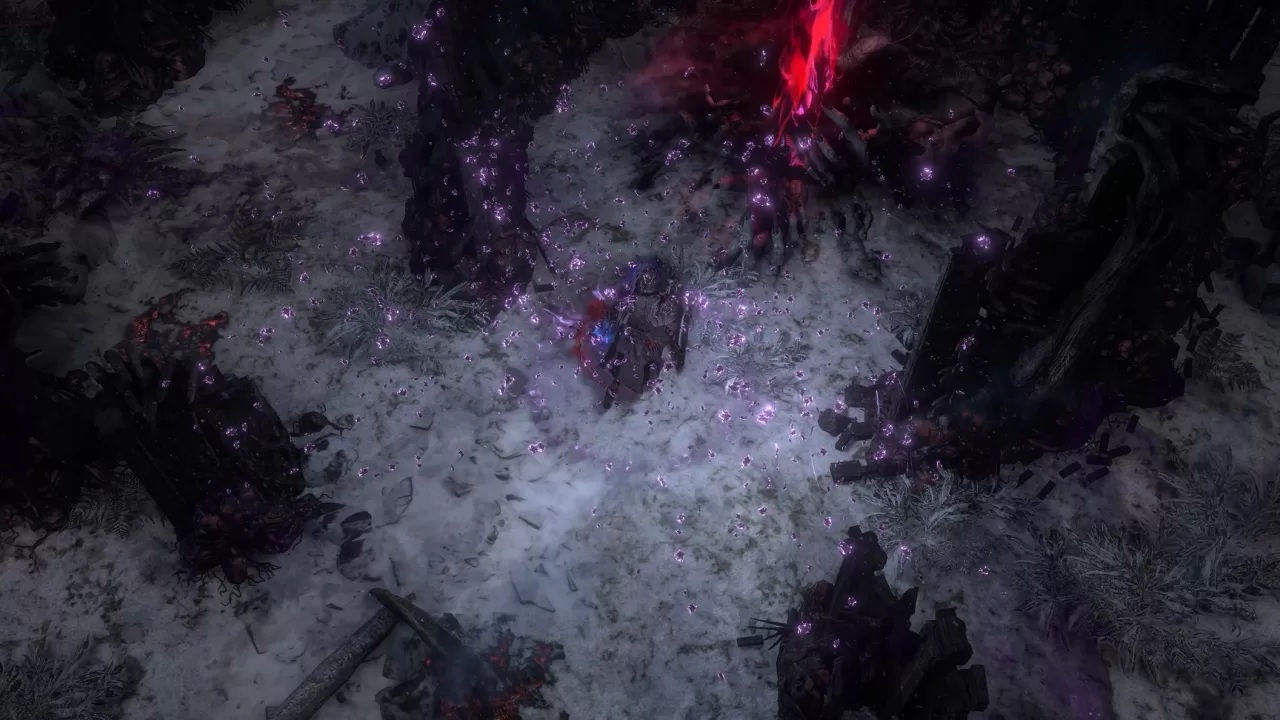
The Genesis Tree and Graft System (Graftblood) makes for a compelling loop combined with Breach. Were you tempted to add more elements to this loop, or did you purposefully want it to be more straightforward?
MR: Ultimately, I think this recipe will work out to be something players love even more than before. And if not, we still have all the old code and content, so we can always bring things back or integrate them differently. We’re being very careful not to remove anything players love. But right now, I’m confident it’s in a good spot. It feels good, it looks good, and it keeps the core of Breach intact. You’re still mowing down heaps of enemies. It’s hack-and-slash at its finest. When you activate a Breach, it still kicks off a ruckus, and that’s just fun.
At a fundamental level, I am pretty happy with this. I would not say it was guaranteed, but we did want to do things on a slightly different level. For example, we have our 16 different graft types, I think it is. There are lots of different skills, options, and cool ways to build character power. One thing that came up, which we did not end up doing, was unique item grafts. That is something I see as part of the future. It could be added mid-league, you never know, or it could appear in a future expansion. There are extra things we can now do with that kind of system that could be quite fun. If you start thinking about where unique grafts could fit, you can already imagine, oh, it could do this, or it could do that.
However, the actual fundamental loop of grafts is very simple and understandable. You get graft blood, you put it into the tree to spawn items, and then you rinse and repeat. I do not want to make things overly complicated, because one of the strengths of Breach is its simplicity and elegance. So we made sure the system has a minimum level of depth while staying clean and fundamental.
The cycle of fighting, getting blood, and spawning items is straightforward. There is combat, there is a meta system, there is a reward, and then you repeat. The grafts add to that by giving character power, letting you integrate skills and become stronger. That is another cool thing, because nowadays, when we design a league, we want worldbuilding, character power, itemization, and crafting systems. This league delivers on all of those in a very clean way.
I am actually quite happy with it. Sometimes when you make these systems, you worry they might be too complicated. You wonder how new players will handle it, how existing players might abuse it, or how it will integrate with everything else. But with this, I feel a lot more confident than I have with some past systems.
So yes, it is quite cool. I am very excited for it. The loop is solid, and I like it. I would not add anything to it fundamentally. I would just expand on things like unique items or maybe some of the passives on the tree, which could be developed further over time. Adding more interesting things, like keystones, would be a natural evolution.
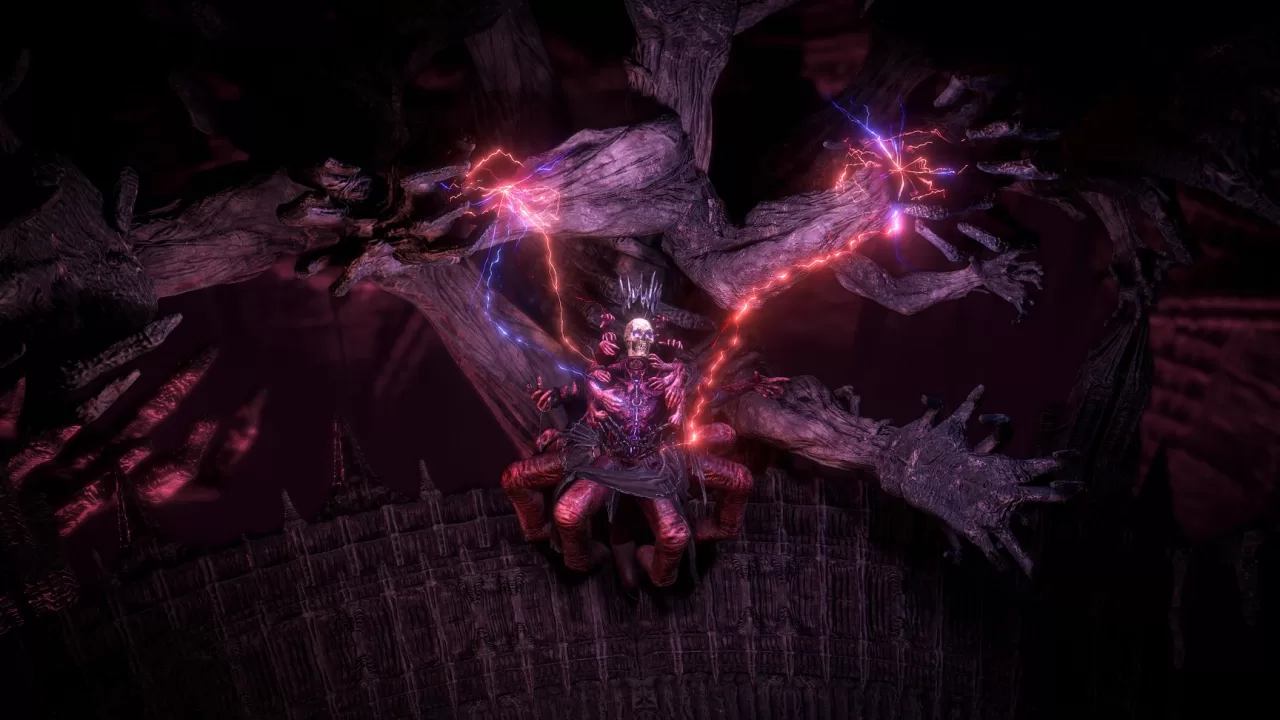
When adding quality-of-life features or enhancements, how do you make it so that you streamline things without making it too easy or straightforward?
MR: You know, if you make things too streamlined to the point that it is no longer a game, it effectively just becomes an automated system. That can take a lot of the kick out of it. It can make it not feel visceral, or make it feel like a spreadsheet 100 percent, and that is honestly the thing we have to be careful about all the time.
Generally, when we design these systems we do not look so much at the specific solutions players suggest at first. What we look at is what people are generally unhappy about, and then we make sure we agree with that assessment.
Some things, like automatically dropping stacked decks on the ground, would historically have been something we said no to. We would have said there should not be so many that you need this kind of system. But due to how balance has evolved and how things have settled, our minds do change. We have to pivot. Suddenly it is like, look, it is fun to drop a lot, it is fun to find a lot, it is just annoying to open them.
A massive rebalance would be required to reduce the number of drops, and that would mean taking away something people currently enjoy. That is not to say you could not make the replacement enjoyable, but in this case it felt better to compromise. A while ago, I would not have made that compromise, because I would have preferred to fix the root problem rather than address the symptom. But sometimes we embrace the problem, decide it is no longer a problem, and provide a solution that makes the experience more efficient and more fun. There is a healthy balance there.
When it comes to items and item weight, that is where things get really tricky. We always want items to feel like they have a kind of realness to them. If itemization ever became just a spreadsheet, we would have serious problems. That is why we have to be careful not to trivialize things like item sorting and item management. We have made small improvements, like with stash systems, but if you go too far, players will not feel attached to their items. They just become trading fodder. Some players may already see them that way, but philosophically, it is important to us that items retain weight and meaning. If we went too far with quality-of-life changes in item management, players would feel less satisfaction from the game. You would be doing all this killing without feeling the reward. That is why those changes are scarier to make.
Other things are more obvious. For example, when you equip a lot of skill gems and they all level up at once, you end up with ten notifications on the side of your screen. You just click, click, click, click, click. Why? Why not just one click to level them all? There is no real reason we have to allow that.
People sometimes ask for auto-leveling of gems. Why do I have to click them at all? The reason is that sometimes there are gems you do not want to level up. That adds complexity. You would need toggles for each gem, and that goes too far. So we have to make sure quality-of-life changes do not overcomplicate things, and that they do not diminish the weight and importance of items. Those are the two big principles. Aside from that, it is usually straightforward to look at things and ask: How can we make this better, without conflicting with those philosophies?
For every new addition and quality of life enhancement in expansions, player feedback is critical. Given the number of comments that you get for players, do you have a specific approach to player feedback?
MR: One method I like to use with players is asking for feedback in bingo card format. Sometimes players will write ten-thousand-word forum posts or emails full of opinions and subjectivity. Instead, I ask them to put together a five-by-five grid with two or three words in each square describing the problems they want fixed.
I find this one of the most efficient ways to gather feedback. In the past, I have even gone on interviews, like one I did with Zizaran, where we went through a popular bingo card. I explained which issues we were willing to fix but did not have time for, which ones we could not fix due to technical limitations, which ones were blocked by philosophical constraints, and which ones we would probably do eventually. Players found that very satisfying, because often they do not understand our engine, our backend code, our security features, or our philosophies. They cannot always know what they want in practical terms.
That is why it is our job to take their feedback and turn it into what they need. I like to start from the perspective of, tell me the problem in as few words as possible, so it is easy to digest. Let us come up with a solution. Then we can go back and read more details to make sure our solution aligns with the problem. Sometimes players even suggest solutions that are simply better, and we cannot ignore that.
A good example is the stacked deck change we just made. Initially, the system outputs the card name first in chat, like ‘The card name was drawn from the deck.’ Players asked us to change it to ‘A card was drawn from the deck: [card name],’ ideally with the card name in a different font color. That was obviously better. We immediately implemented it.
So now we have the best of both worlds. Players were complaining about RSI from stacked decks. We came up with a solution that was not exactly what they asked for, but it helped. They then suggested improvements, and we implemented them. Now we are in a good spot, collaborating with the community to achieve the best outcome for everyone.
Almost all of this comes from player feedback. We try to get it in short, easy-to-process form, then our team digs into the details to make sure our solutions really fix the problems. Honestly, I enjoy the process. It is very satisfying to solve these kinds of problems, whether objective or subjective, especially when it comes to quality-of-life improvements.
There are lots of additions in this expansion. Could you give us your own “bingo card” of things you’re most excited about for players to experience?
MR: I feel like I’m going to put everything on there. Nah, but okay, just going off my instinct.
Well, I love boss fights, so obviously working towards and fighting the new Breach bosses is exciting.
The Bloodline classes. I know it’s not part of the Breach stuff, and I know the Breach stuff is easy to take the spotlight, but those Bloodline classes are cool. I like that you can go and kill different bosses you might not normally want to kill, then adopt a new class and mix it with your existing Ascendancy. There are so many new combinations there. Any Bloodline class can be paired with any Ascendancy, and then you can put some number of nodes into each. Oh my God, the amount of different build possibilities is out of control. That’s exciting.
I can’t wait to see what people think are the best combinations. That’s going to be fun.
Obviously, playing with the new skills too—like playing a wand build, trying out some of the new kinetic skills, and seeing how that goes. That seems like it’ll be pretty fun.
But yeah, I mean, obviously I’m going to love doing Breach, but I’m trying to think more about the things that aren’t so obvious. There’ll be general balance changes, meta shifts, endgame adjustments, and the normal stuff we do. I think that often goes under the radar, but it ends up being one of the most important things for replayability. Because, you know, we’re talking about playing again for the millionth time. I don’t actually know the number, but I’ve been playing this game since its inception, and I still play every single league all the way through to the endgame.
So yeah, it’s all very exciting. I like having new metas, new builds, new characters, and new bosses. It’s amazing. It’s hard to pick just one thing. And when you’re the director, getting it all made and seeing it all come to life, it’s very hard to choose favorites.
Path of Exile: Keepers of the Flame launches on October 31, 2025.